

How to Check Your Water Meter for a Leak
A step-by-step meter test to confirm a leak, and how to narrow down whether it's inside the house or in the underground line.
What This Test Tells You
Your water meter measures every drop of water passing through it on its way to your property, whether that water is going to a running faucet or leaking silently underground. A simple meter test is one of the most reliable ways to confirm whether you have a leak at all, and with one extra step, it can also give you a good sense of whether the leak is inside the house or in the underground line.
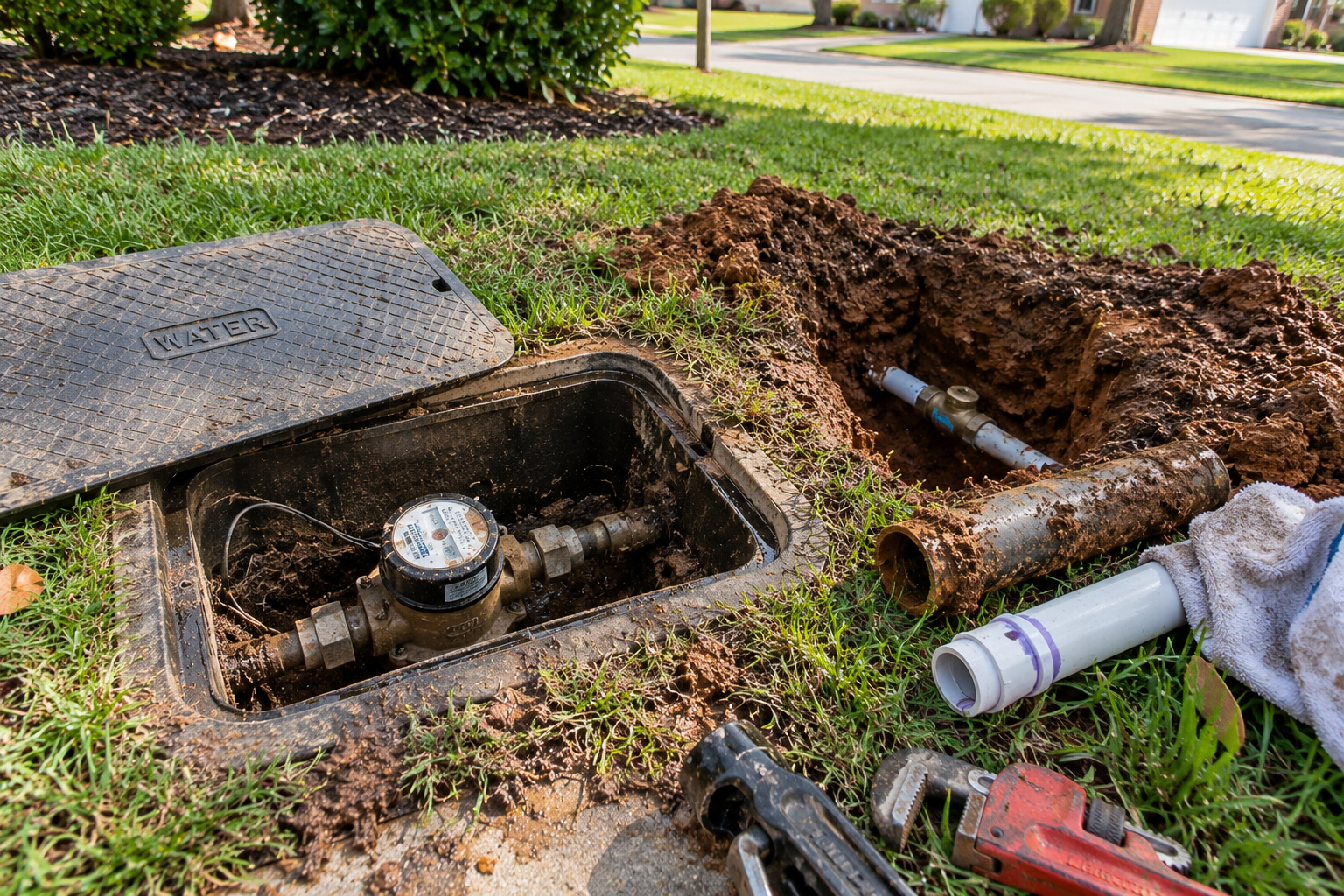
Steps 1–2: Find the Meter and Note the Starting Position
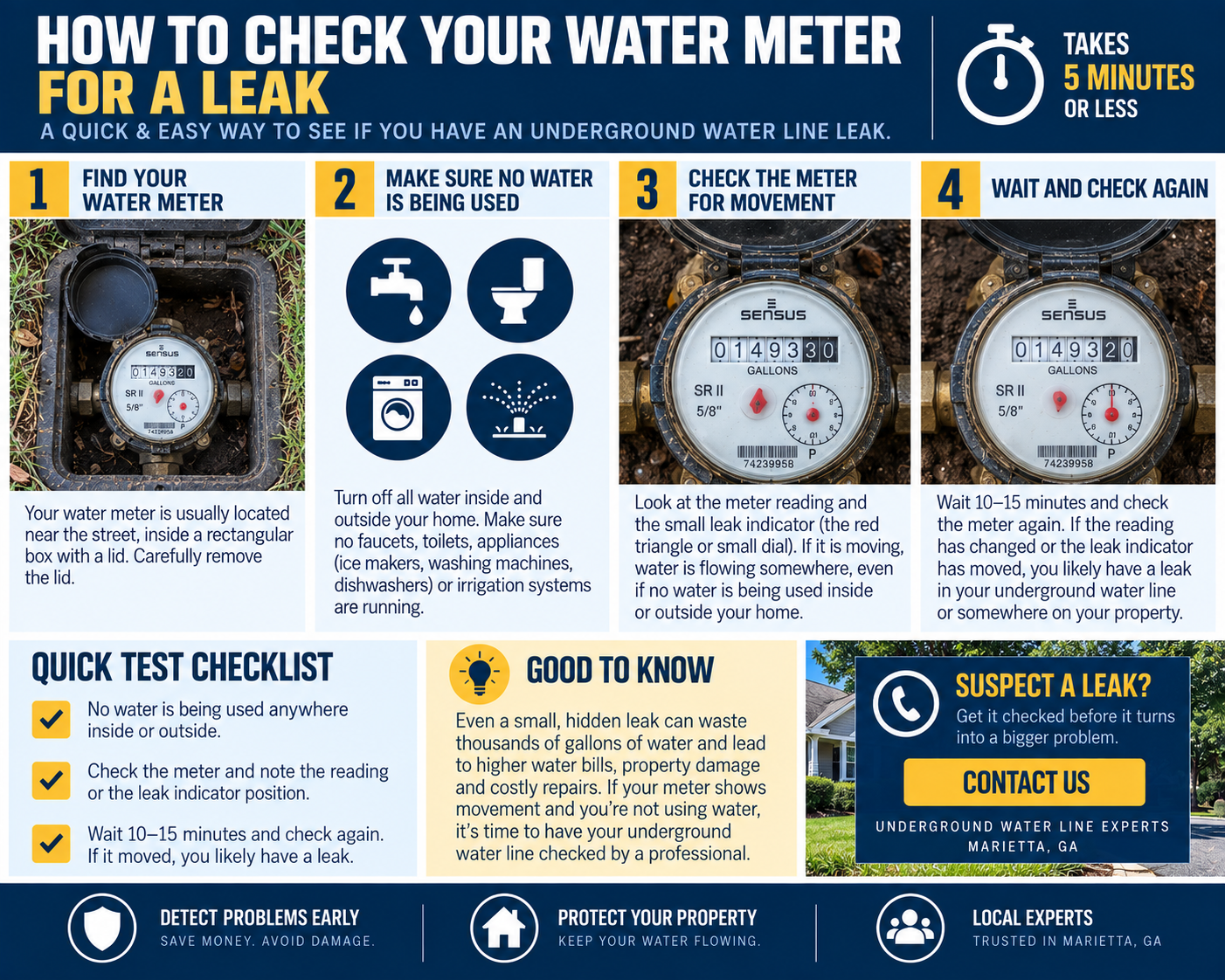
Water meters are typically installed in an underground box near the property line, often close to the street or sidewalk. Most meters include a leak indicator — commonly a small triangular or star-shaped dial, or a low-flow indicator on a digital display — that moves whenever any water is flowing through the meter. Note its position, or the numbers on the dial, before going further.
Steps 3–5: Turn Everything Off, Wait, Then Re-Check
Go through the house and make sure everything that uses water is fully off, then wait at least 15 to 30 minutes before checking the meter again.
- All faucets, showerheads, and outdoor spigots
- Every toilet (confirm none are silently running)
- Washing machine, dishwasher, and ice maker
- Any irrigation or sprinkler system
Step 6: Narrow Down Inside vs. Underground
If the meter shows movement, the next useful step is isolating the house from the underground line, if your property has a separate main shutoff valve. Close that shutoff so no water can reach the interior plumbing, then recheck the meter one more time.
If the meter stops moving with the house shutoff closed, the leak is inside the house. If it keeps moving even with the shutoff closed, the leak is on the underground line between the meter and the shutoff valve.
What If I Don't Have a Separate Shutoff?
Not every property has an easily accessible main shutoff. If yours doesn't, the meter test still confirms that a leak exists on your side of the meter, even without this extra isolation step.
What to Do If the Test Points to an Underground Leak
If your results point to the underground line, the next step is confirming and locating the leak before any digging happens. See underground leak detection for how that process works, and check the yard itself — our guides on signs of an underground water line leak and water leaking in the yard cover what else to look for.
Helpful Resources
Learn more about underground water lines in Marietta and make informed decisions about your project.
- Signs of an Underground Water Line LeakA room-by-room and yard checklist for recognizing an underground water line leak before it becomes a bigger repair.
- Water Leaking in the Yard: Is It Your Water Line?How to tell a genuine underground water-line leak apart from drainage, irrigation, or rain runoff — and what to do once you're fairly sure.
- Who's Responsible for the Water Line From Meter to House?The public main vs. the property owner's line — and why your Marietta address doesn't always tell you which authority applies.
Checking Your Meter: FAQ
Common questions about the meter test.
Checking Your Meter: FAQ
Common questions about the meter test.
How long should I wait before rechecking the meter?
A reasonable wait is at least 15 to 30 minutes with everything off, though longer works too. A very slow leak may take more time to produce a noticeable change.
What if I don't have a separate main house shutoff valve?
Not every property has an easily accessible whole-house shutoff separate from the meter's own shutoff. The meter test can still confirm a leak exists on your side of the meter, even without pinpointing whether it's inside the house or underground.
Can a running toilet cause the same result as an underground leak?
Yes — a running toilet is one of the most common causes of an indoor leak that shows up exactly like a meter still moving with everything 'off.' It's worth checking each toilet individually before assuming the leak is underground.
Is a moving meter always a water line problem?
Not necessarily an underground line problem specifically — it confirms water is escaping somewhere on your side of the meter, which includes both interior plumbing and the underground service line.
What should I do after confirming a leak with the meter test?
The next step is underground leak detection to pinpoint the leak's location before any digging or trenchless work starts, rather than excavating based on a guess.
Can a water meter test detect an underground pipe leak on its own?
It confirms that water is escaping somewhere on your side of the meter, but it doesn't pinpoint the exact spot. Acoustic equipment and line locating are what narrow an underground pipe leak down to a specific, diggable location.
Meter Test Point to an Underground Leak?
Reach out and we'll help you get it located before any digging starts — no obligation to move forward.
Meter Test Point to an Underground Leak?
Reach out and we'll help you get it located before any digging starts — no obligation to move forward.
Call (770) 676-1685