
Trenchless Sewer Line Replacement in Marietta, GA
Replacing a failing sewer line doesn't have to mean trenching your whole yard. Here's how trenchless replacement works, step by step, and what shapes the project.
What Trenchless Sewer Replacement Means
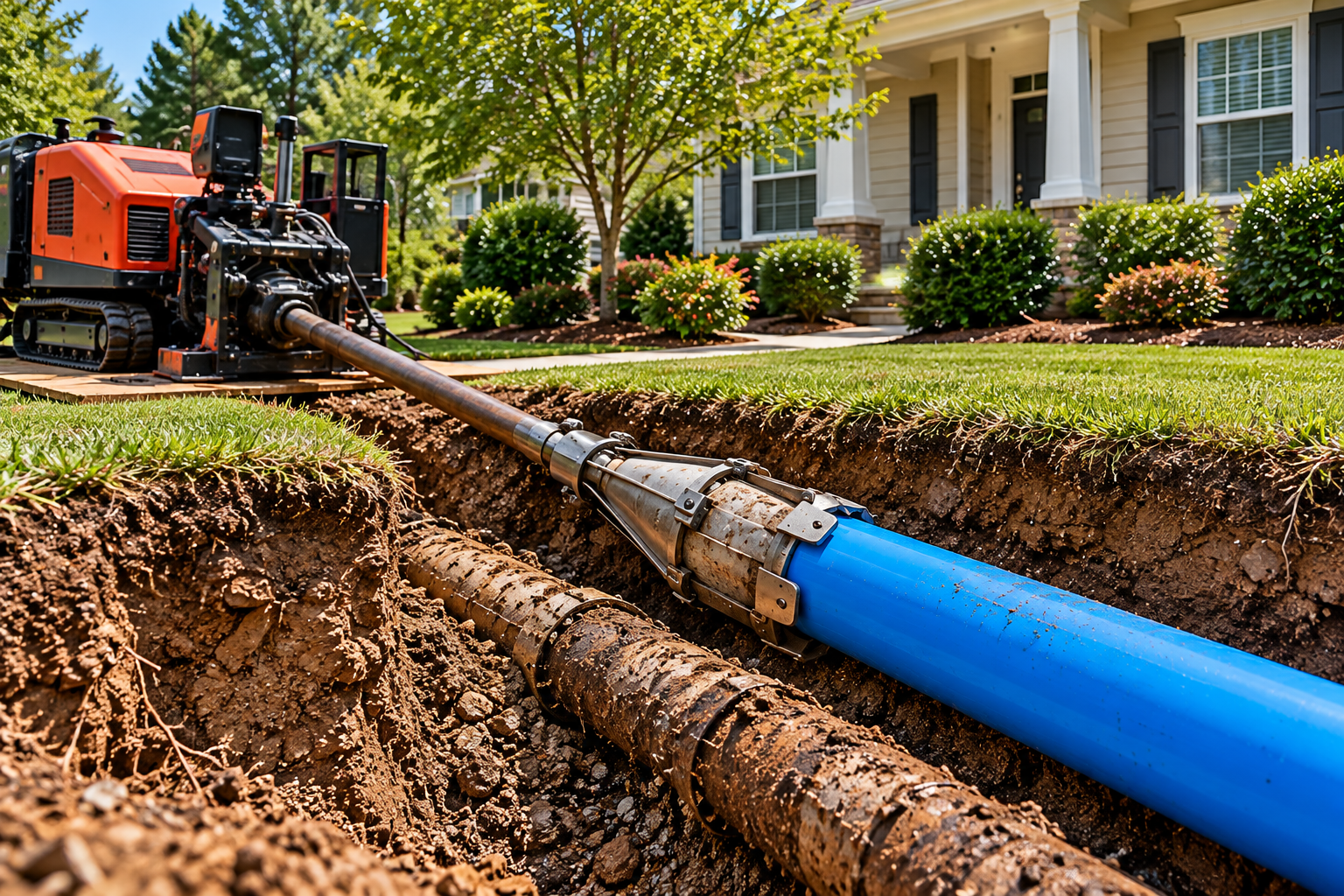
Trenchless sewer line replacement installs a brand-new sewer line alongside your existing one without digging a continuous trench along its entire route. Using a minimally invasive installation method such as directional boring, the new pipe is put in place and connected into the sewer system, which keeps most of your yard, driveway, and landscaping intact. It's an option when site conditions allow.
That makes it a popular choice for properties with mature trees, long runs, or hardscape above the line. Sewer lines are repaired or replaced depending on their condition, and trenchless installation applies to the replacement side: when the existing line is failing and a new one is the right answer.
If you're still sizing up a damaged line, start with trenchless sewer line repair. If trenchless isn't a good fit for your property, traditional sewer line replacement is the alternative, and the guide to trenchless vs. traditional sewer repair explains how the two compare. We install new pipe; we do not offer relining of existing pipe.
Trenchless Candidacy Assessment
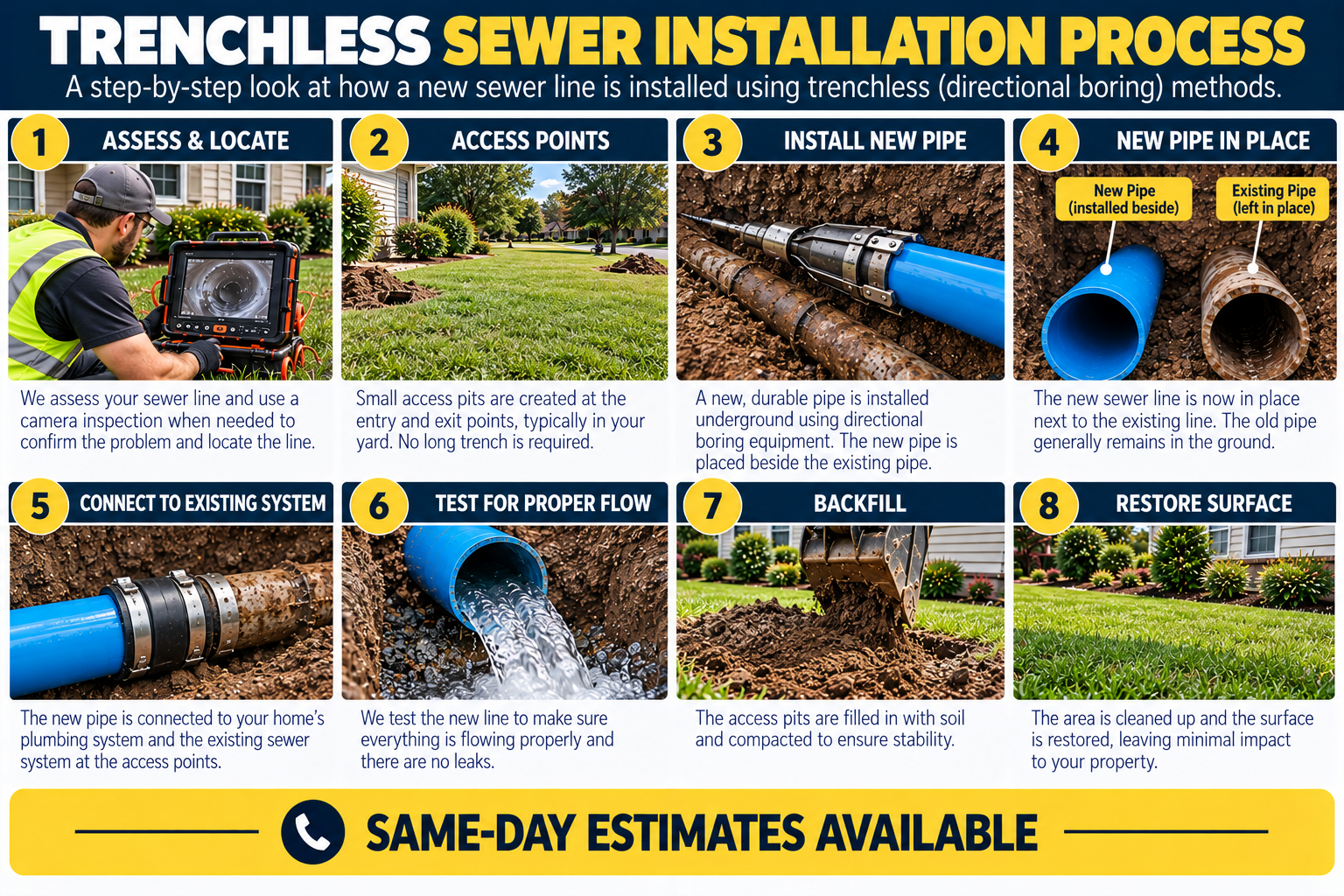
The line is assessed on-site first. Enough room beside the existing line and workable access make a property a good candidate for trenchless.
Small Access Points
Digging is limited to small access points instead of the full length of the line, so most of your yard and landscaping stays untouched.
New Pipe Installed Alongside
A brand-new pipe is installed next to the existing line, then connected into the sewer system at the house end and at the sewer end.
Protecting Trees & Hardscape
Driveways, patios, walkways, and mature trees along the line's path are a common reason homeowners choose trenchless replacement.
When Trenchless May Not Fit
Limited room beside the line, crowded utilities, or difficult ground can favor conventional replacement. Not every line qualifies.
Trenchless vs. Directional Boring
Trenchless replacement often uses directional boring equipment. Boring is also used on its own, such as to run a new line under a driveway.
What Affects the Trenchless Sewer Cost
Trenchless sewer replacement cost varies too much by property to generalize, but the same factors typically drive it.
In the Marietta area, red clay, tree roots, and rock can all affect how equipment moves and how the pits are dug. Site conditions are confirmed in an assessment.
- Line Length
- Depth
- Access
- Soil & Site Conditions
- Connections & Restoration
Underground Specialists
Focused on buried lines: water and sewer repair, replacement, and trenchless work.
Clear Next Steps
We help you understand your options before any work starts.
Trenchless Options
Minimal-disruption methods are available when a property qualifies.
No-Pressure Contact
Reach out by phone, text, or form. There's no obligation to move forward.
 Tap to enlargeClick to enlarge
Related Underground Services
- Trenchless Sewer Line RepairFixing a damaged sewer line with a new pipe installed alongside it, with minimal digging.
- Sewer Line ReplacementFull open-trench replacement when the sewer line is failing along its length.
- Sewer Line RepairTargeted repair of a cracked, offset, or root-damaged section of sewer line.
- Trenchless Water Line ReplacementReplacing a line through small access points instead of a full open trench.
- Directional BoringInstalling a new line under a driveway or hardscaping without tearing it up.
Helpful Resources
Learn more about underground water lines in Marietta and make informed decisions about your project.
- Trenchless vs. Traditional Sewer Repair: What's the Difference?How trenchless sewer work compares with traditional excavation, and what makes a property a fit for either.
- Sewer Line Repair vs. Replacement: How to DecideA factor-by-factor comparison to help weigh a targeted sewer repair against replacing the whole line.
- Sewer Line Repair and Replacement Costs: What Drives the PriceWhat changes the cost of a sewer repair or replacement, what an estimate should spell out, and how to compare quotes fairly.
- Signs of a Broken Sewer Line: What Marietta Homeowners Should Watch ForThe indoor, yard, and drain warning signs of a broken or collapsing sewer line, and how to tell them apart from an ordinary clog.
Trenchless Sewer Line Replacement FAQ
Common questions about trenchless sewer line replacement in Marietta.
Want to Skip the Long Trench?
Reach out and we'll help you determine whether your property is a good trenchless candidate, with no obligation to move forward.
What Trenchless Sewer Replacement Means
Trenchless sewer line replacement installs a brand-new sewer line alongside your existing one without digging a continuous trench along its entire route. Using a minimally invasive installation method such as directional boring, the new pipe is put in place and connected into the sewer system, which keeps most of your yard, driveway, and landscaping intact. It's an option when site conditions allow.
That makes it a popular choice for properties with mature trees, long runs, or hardscape above the line. Sewer lines are repaired or replaced depending on their condition, and trenchless installation applies to the replacement side: when the existing line is failing and a new one is the right answer.
If you're still sizing up a damaged line, start with trenchless sewer line repair. If trenchless isn't a good fit for your property, traditional sewer line replacement is the alternative, and the guide to trenchless vs. traditional sewer repair explains how the two compare. We install new pipe; we do not offer relining of existing pipe.
Trenchless Candidacy Assessment
The line is assessed on-site first. Enough room beside the existing line and workable access make a property a good candidate for trenchless.
Small Access Points
Digging is limited to small access points instead of the full length of the line, so most of your yard and landscaping stays untouched.
New Pipe Installed Alongside
A brand-new pipe is installed next to the existing line, then connected into the sewer system at the house end and at the sewer end.
Protecting Trees & Hardscape
Driveways, patios, walkways, and mature trees along the line's path are a common reason homeowners choose trenchless replacement.
When Trenchless May Not Fit
Limited room beside the line, crowded utilities, or difficult ground can favor conventional replacement. Not every line qualifies.
Trenchless vs. Directional Boring
Trenchless replacement often uses directional boring equipment. Boring is also used on its own, such as to run a new line under a driveway.
What Affects the Trenchless Sewer Cost
Trenchless sewer replacement cost varies too much by property to generalize, but the same factors typically drive it.
In the Marietta area, red clay, tree roots, and rock can all affect how equipment moves and how the pits are dug. Site conditions are confirmed in an assessment.
- Line Length
- Depth
- Access
- Soil & Site Conditions
- Connections & Restoration
Underground Specialists
Focused on buried lines: water and sewer repair, replacement, and trenchless work.
Clear Next Steps
We help you understand your options before any work starts.
Trenchless Options
Minimal-disruption methods are available when a property qualifies.
No-Pressure Contact
Reach out by phone, text, or form. There's no obligation to move forward.
Tap to enlargeClick to enlargeRelated Underground Services
- Trenchless Sewer Line RepairFixing a damaged sewer line with a new pipe installed alongside it, with minimal digging.
- Sewer Line ReplacementFull open-trench replacement when the sewer line is failing along its length.
- Sewer Line RepairTargeted repair of a cracked, offset, or root-damaged section of sewer line.
- Trenchless Water Line ReplacementReplacing a line through small access points instead of a full open trench.
- Directional BoringInstalling a new line under a driveway or hardscaping without tearing it up.
Helpful Resources
Learn more about underground water lines in Marietta and make informed decisions about your project.
- Trenchless vs. Traditional Sewer Repair: What's the Difference?How trenchless sewer work compares with traditional excavation, and what makes a property a fit for either.
- Sewer Line Repair vs. Replacement: How to DecideA factor-by-factor comparison to help weigh a targeted sewer repair against replacing the whole line.
- Sewer Line Repair and Replacement Costs: What Drives the PriceWhat changes the cost of a sewer repair or replacement, what an estimate should spell out, and how to compare quotes fairly.
- Signs of a Broken Sewer Line: What Marietta Homeowners Should Watch ForThe indoor, yard, and drain warning signs of a broken or collapsing sewer line, and how to tell them apart from an ordinary clog.
Trenchless Sewer Line Replacement FAQ
Common questions about trenchless sewer line replacement in Marietta.
How does trenchless sewer line replacement work?
A new sewer pipe is installed alongside the existing line using a minimally invasive method, with digging limited to small access points. The new pipe is then connected into the sewer system at the house and at the sewer connection, the line is tested and inspected, and the access points are filled in and restored.
Is trenchless replacement the same as relining my sewer pipe?
No. Relining puts a liner inside the existing pipe, and we don't offer it. We also don't do pipe bursting, which breaks up the old pipe as a new one goes in. Trenchless replacement here means installing a new pipe alongside the old one.
Does every property qualify for trenchless sewer replacement?
No. Limited room beside the line, other buried utilities nearby, or difficult ground can make conventional replacement the better fit. It's confirmed on-site.
Does trenchless replacement cost more than open-trench?
Costs vary by property, line length, access, and site conditions, so a general comparison isn't reliable. Trenchless can reduce restoration costs where a trench would cross hardscape or landscaping, but a site assessment is needed to compare for your line.
Is trenchless replacement the same as directional boring?
They're closely related. Trenchless replacement often uses directional boring equipment to install a new line alongside the existing one. Directional boring is also used on its own to run a new line along a new path, such as under a driveway or patio.
Can trenchless work if my line is badly damaged?
A new pipe installed alongside the old one doesn't depend on the old pipe being intact, so a badly damaged line can still be a candidate. Whether your property qualifies is confirmed on-site, and if not, conventional replacement is the alternative.
Want to Skip the Long Trench?
Reach out and we'll help you determine whether your property is a good trenchless candidate, with no obligation to move forward.
Call (770) 676-1685