
Signs of a Broken Sewer Line
An indoor, yard, and drain checklist for spotting sewer line damage early, and telling it apart from an ordinary clog.
Why Sewer Line Problems Are Easy to Miss
Your sewer line is buried, so the first signals of trouble usually show up inside the house or at the surface of the yard, not at the pipe itself. A damaged line can be cracked, separated at a joint, pinched by roots, collapsed in one spot, or sagging so that waste sits instead of flowing. Each of those can produce slightly different symptoms.
No single sign proves the sewer line is broken. What matters is the pattern: how many fixtures are affected, how often it happens, and whether cleaning provides lasting relief. This guide is for homes connected to the public sewer. Homes on a septic system have a different setup and different warning signs.
Several Drains Slow Down at Once
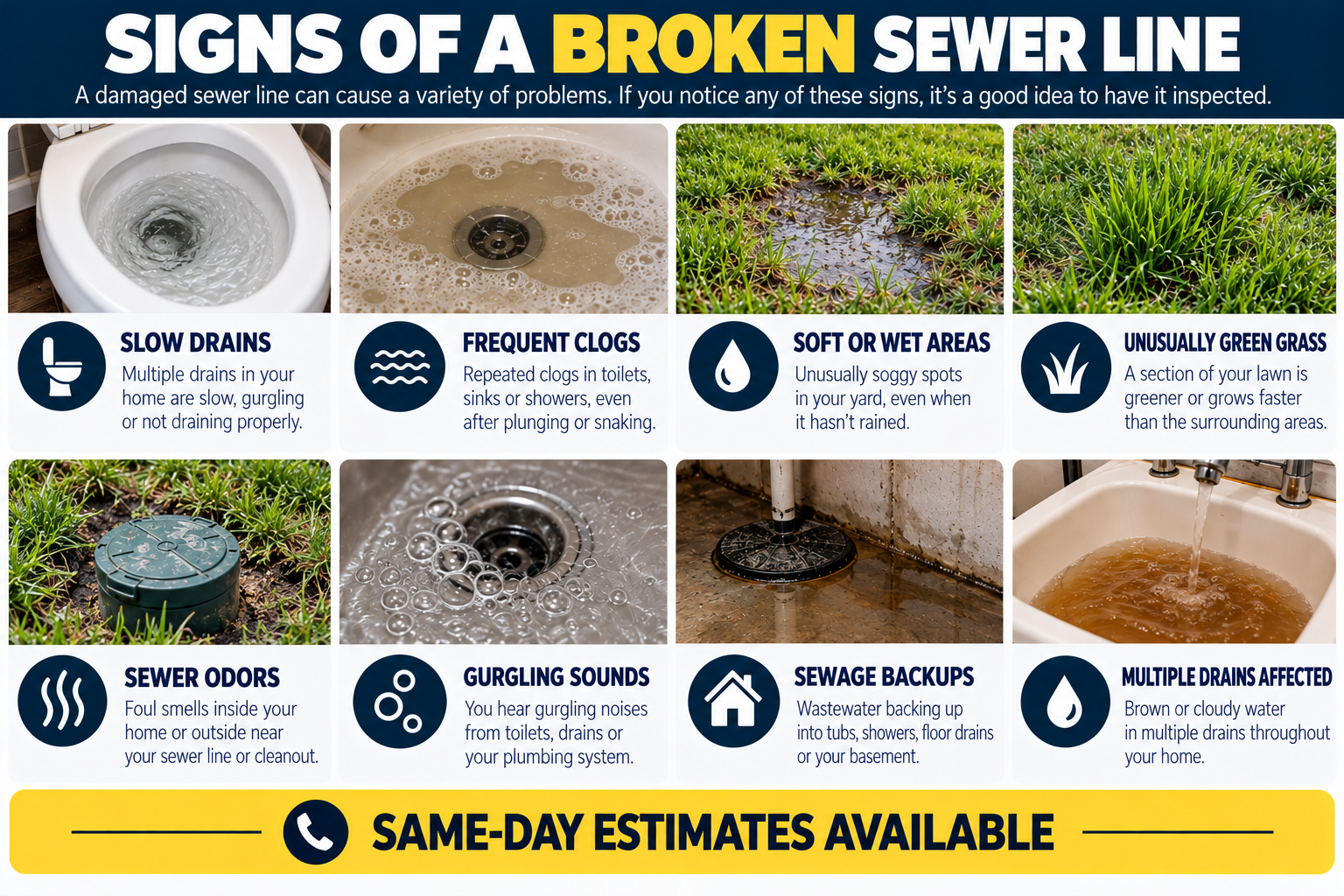
One slow sink is almost always a local clog in that fixture's own drain. When the tub, a toilet, and the kitchen sink all drain slowly at the same time, the problem is more likely downstream, in the main drain or the sewer line itself.
Pay attention to the lowest fixtures in the house first. Wastewater backs up to the lowest opening, so a basement floor drain, shower, or tub can show a backup before anything else does.
- Multiple fixtures slow or backed up together
- Water rising in a tub or shower when the washing machine drains
- A toilet that bubbles or gurgles when another fixture runs
- Backups in the lowest drain in the house
Gurgling, Odors, and Backups
Gurgling sounds in drains and toilets mean air is being forced through water because the drain line isn't clearing normally. A persistent sewage smell inside the house, or near a cleanout or a spot in the yard, can mean wastewater is escaping the pipe.
Treat an actual sewage backup as more urgent than a slow drain. Stop using water in the house, and avoid contact with the water that has backed up. It can carry bacteria.
If Sewage Is Backing Up Now
Stop running water and avoid using toilets, showers, and the washing machine. Keep children and pets away from the affected area. A backup caused by the public main is the utility's issue, so it's reasonable to check with the utility while you arrange an assessment of your own line.
In the Yard
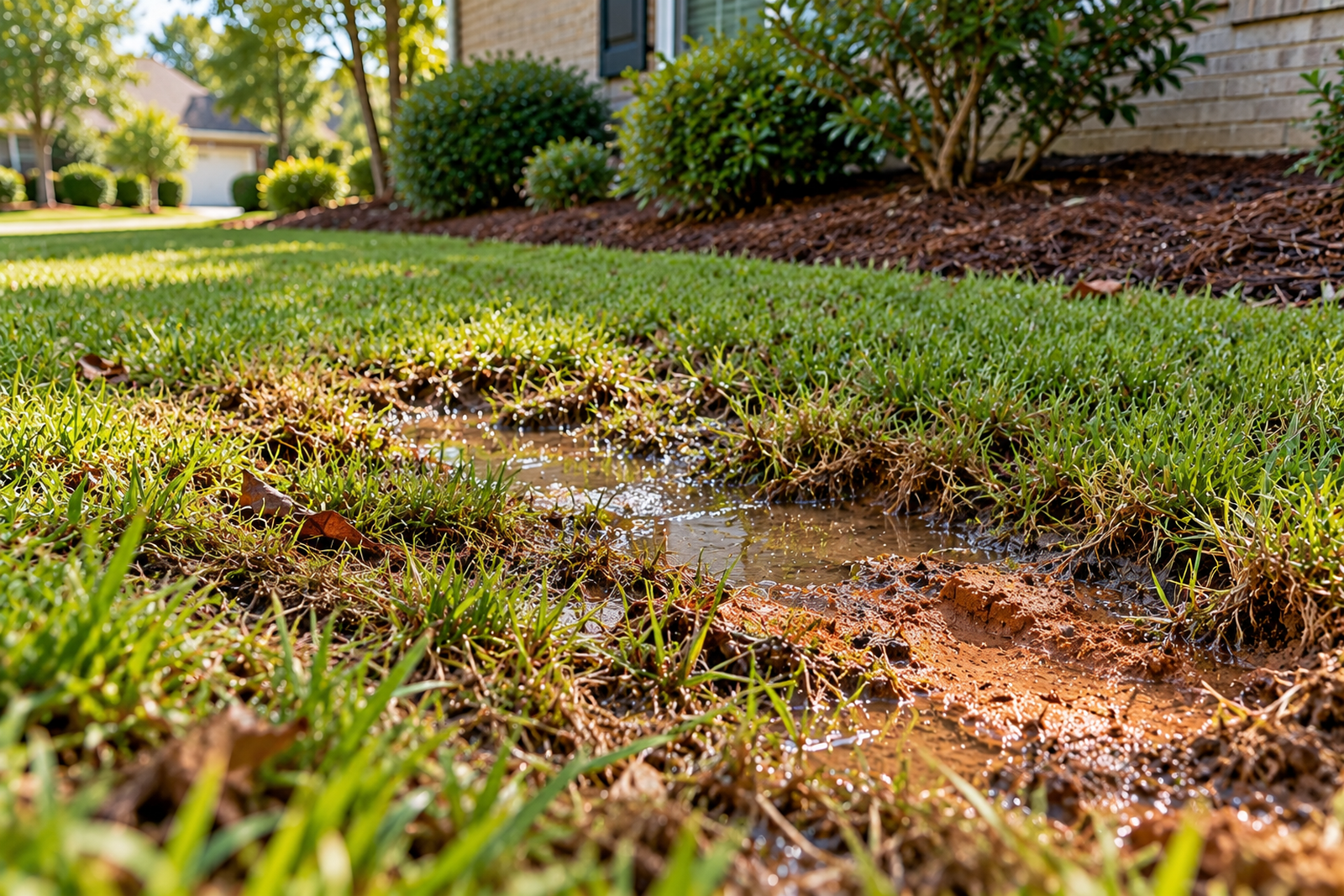
A leaking or collapsing sewer line can show itself at the surface. Watch for a damp or soggy area that stays wet when the weather has been dry, grass that is noticeably greener or lusher along a line running from the house, a sunken patch or small depression above the path of the pipe, or a sewage smell outdoors.
Wet spots in a yard have many possible causes, including irrigation, drainage, and a leaking water line. A sewage odor, or a wet area along the path of the sewer, makes the sewer line a more likely cause. For a closer look at the water-line side, see water leaking in the yard.
- A persistent damp or soggy patch in dry weather
- Unusually green, lush grass along a line from the house
- A sunken area or small depression in the lawn
- Sewage odor outdoors
Recurring Clogs After Cleaning
If a drain is cleared and the problem returns within weeks, the clog may not be the real issue. Roots entering a joint, a pipe that has sagged, or a section that is partly collapsed can catch solids again and again.
A pattern of repeat clogs on the same line is one of the most useful signs of an underlying pipe problem, and is a good reason to look inside the line rather than keep clearing it.
Pests and Foundation Clues
Rodents and insects can travel along broken sewer pipes, so a sudden increase in drain flies, roaches, or rats near drains or the foundation can occasionally be a clue. Subtle changes near the foundation, such as soil settling in one area along the path of the line, are another.
These are weaker signs than backups or odors, and they have many other possible causes, but they add weight when they appear alongside other symptoms.
How the Problem Is Confirmed
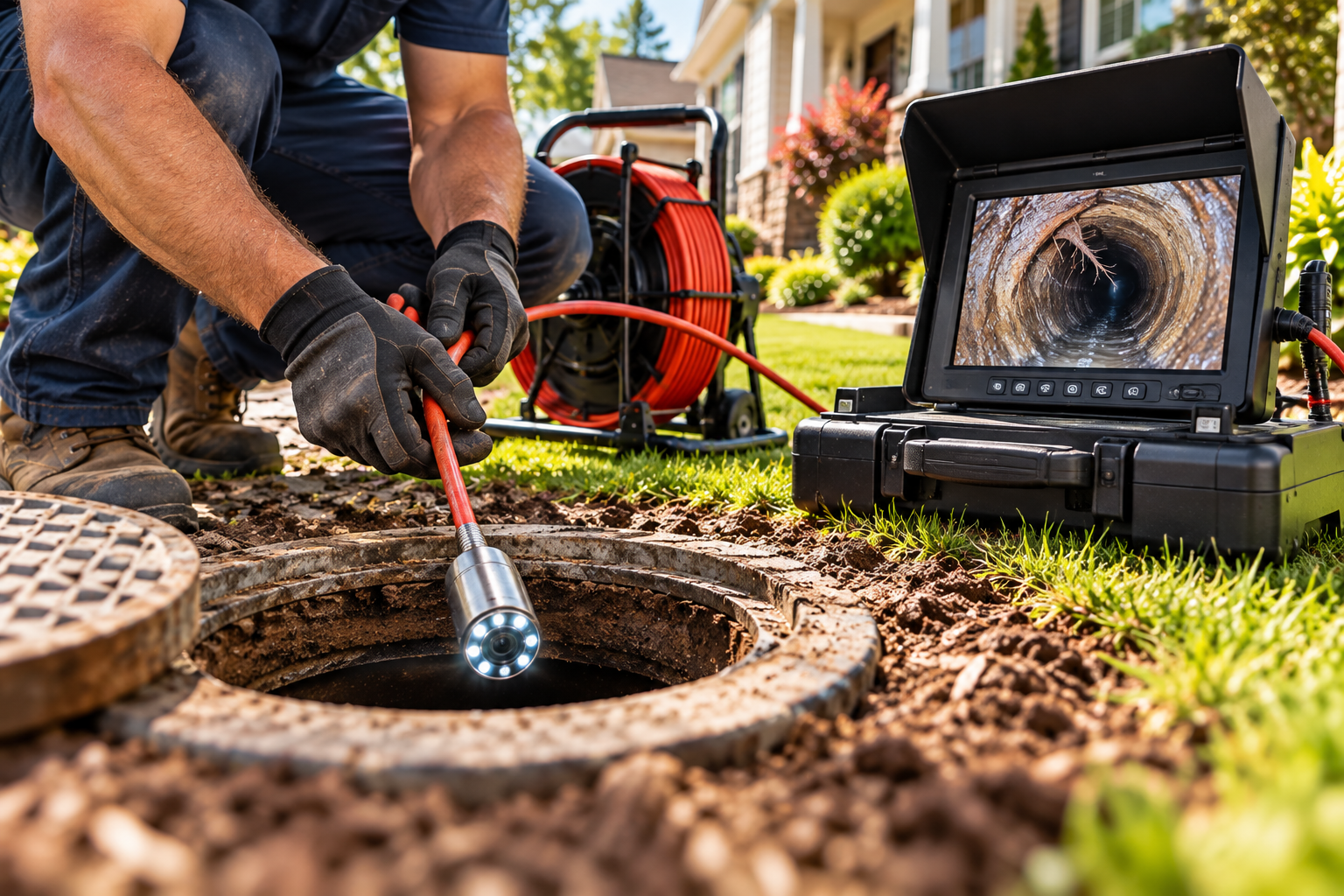
Symptoms point toward a sewer line problem, but they don't tell you exactly what is wrong or where. The first step is an on-site assessment of the line and the property: where the symptoms show up, where the line runs, and what's around it. When it's needed to see what's happening inside the pipe, a camera inspection can be done or arranged. Whether one is necessary is decided during the assessment, and often the problem can be identified without one.
What the inspection finds is what determines the repair. A single damaged section may be a candidate for sewer line repair, while widespread damage points toward sewer line replacement. Our guide to repair vs. replacement lays out the factors.
What to Do Next
Write down what you're seeing, when it started, and which fixtures are affected. Avoid repeated use of chemical drain cleaners, which are harsh on pipe and unsafe for anyone who later works on the line. If you suspect a break, getting the line assessed sooner is usually better than waiting for a full backup.
 Tap to enlargeClick to enlarge
Related Underground Services
- Sewer Line RepairTargeted repair of a cracked, offset, or root-damaged section of sewer line.
- Sewer Line ReplacementFull open-trench replacement when the sewer line is failing along its length.
- Trenchless Sewer Line RepairFixing a damaged sewer line with a new pipe installed alongside it, with minimal digging.
- Broken Underground Pipe RepairWhat to do first for a visibly surfacing break or sudden pressure loss.
Related Underground Services
- Sewer Line RepairTargeted repair of a cracked, offset, or root-damaged section of sewer line.
- Sewer Line ReplacementFull open-trench replacement when the sewer line is failing along its length.
- Trenchless Sewer Line RepairFixing a damaged sewer line with a new pipe installed alongside it, with minimal digging.
- Broken Underground Pipe RepairWhat to do first for a visibly surfacing break or sudden pressure loss.
Helpful Resources
Learn more about underground water lines in Marietta and make informed decisions about your project.
- Sewer Line Repair vs. Replacement: How to DecideA factor-by-factor comparison to help weigh a targeted sewer repair against replacing the whole line.
- Trenchless vs. Traditional Sewer Repair: What's the Difference?How trenchless sewer work compares with traditional excavation, and what makes a property a fit for either.
- Sewer Line Repair and Replacement Costs: What Drives the PriceWhat changes the cost of a sewer repair or replacement, what an estimate should spell out, and how to compare quotes fairly.
- Who's Responsible for the Water Line From Meter to House?The public main vs. the property owner's line — and why your Marietta address doesn't always tell you which authority applies.
Signs of a Broken Sewer Line: FAQ
Common questions about recognizing sewer line damage.
Signs of a Broken Sewer Line: FAQ
Common questions about recognizing sewer line damage.
How do I tell a clogged drain from a broken sewer line?
A clog usually affects one fixture. When several fixtures slow down at the same time, backups appear in the lowest drain, or the problem keeps returning after the line is cleared, the sewer line itself is more likely involved.
Can tree roots really break a sewer line?
Roots can enter through joints and small cracks in search of moisture, and over time they can widen the opening and catch solids. Whether roots are the cause or just a symptom of an already-damaged joint is something an inspection can show.
Is a wet spot in my yard a sewer leak?
Not necessarily. Irrigation, drainage, and water-line leaks also cause wet patches. A sewage smell, or a damp area along the path of the sewer line, makes a sewer leak more likely.
Is a sewer backup an emergency?
A sewage backup into the house should be treated as urgent: stop using water and keep people and pets away from it. A slow drain with no backup is less urgent but still worth investigating if it's recurring.
Who is responsible for a broken sewer line on my property?
Generally the pipe on your property is the owner's responsibility. For City of Marietta sewer service, the city's FAQ says the owner clears blockages in a service line, while the city repairs a failed pipe within the public right-of-way or its easement. Cobb County says ownership depends on recorded easements. Confirm with the utility that serves you.
Does homeowners insurance cover a broken sewer line?
Coverage varies by policy. Some policies exclude sewer line damage or sewage backup unless an endorsement was added. Check your policy or ask your insurer before work begins.
Seeing Signs of a Sewer Problem?
Reach out and we'll help you understand what's likely going on, with no obligation to move forward.
Seeing Signs of a Sewer Problem?
Reach out and we'll help you understand what's likely going on, with no obligation to move forward.
Call (770) 676-1685