
Sewer Line Repair in Marietta, GA
A cracked, offset, or root-damaged section of your sewer line doesn't always mean replacing the whole run. Here's how a targeted repair works, and how to tell when it's enough.
What a Sewer Line Repair Involves
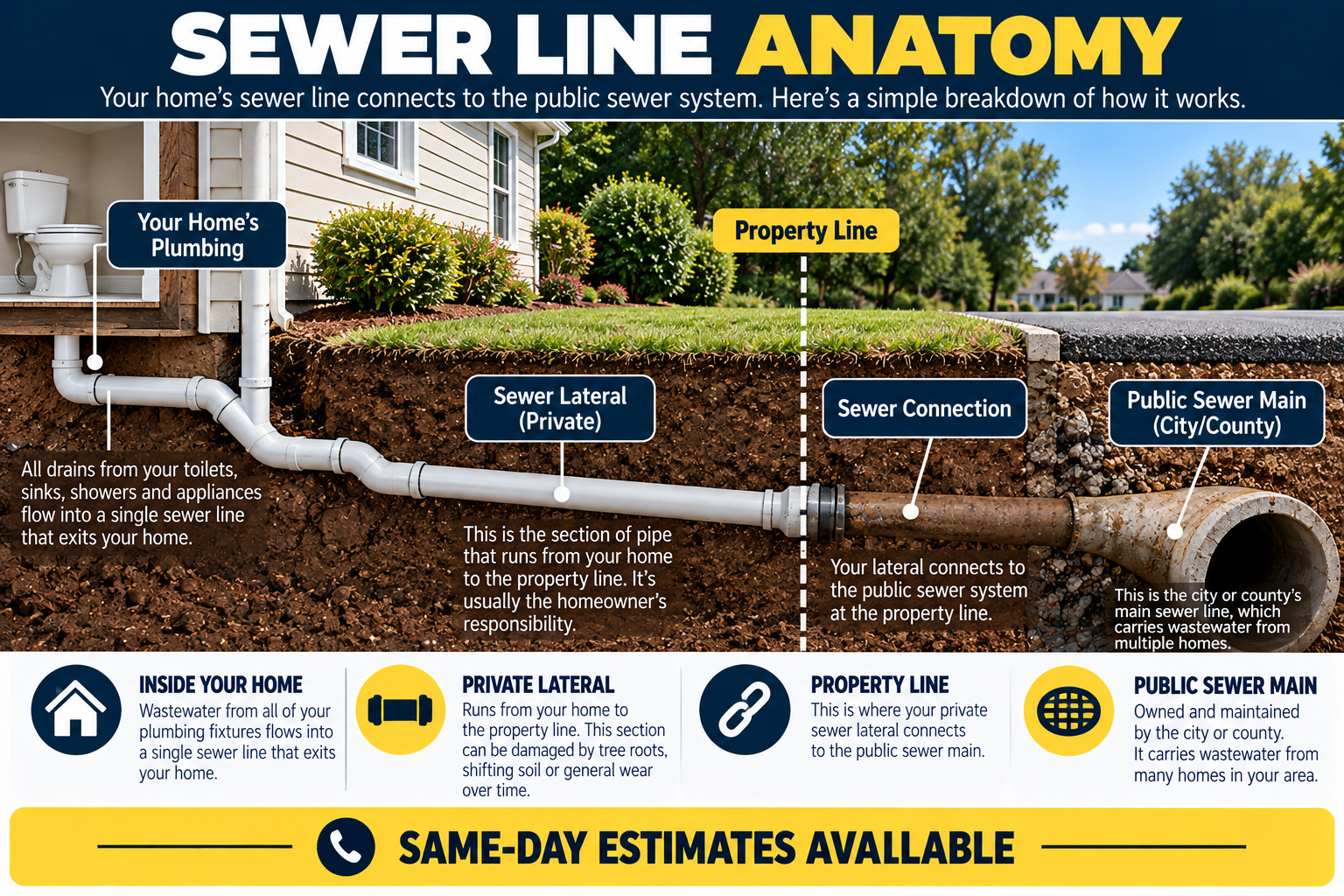
Your sewer line, sometimes called the sewer lateral or building sewer, is the buried pipe that carries wastewater from your house to the public sewer. It runs on gravity, so it only works while it stays sealed, connected end to end, and sloped continuously downhill. A sewer line repair fixes a specific failure in that pipe: a crack, a joint that has pulled apart, a section pushed out of line, or a stretch damaged by roots.
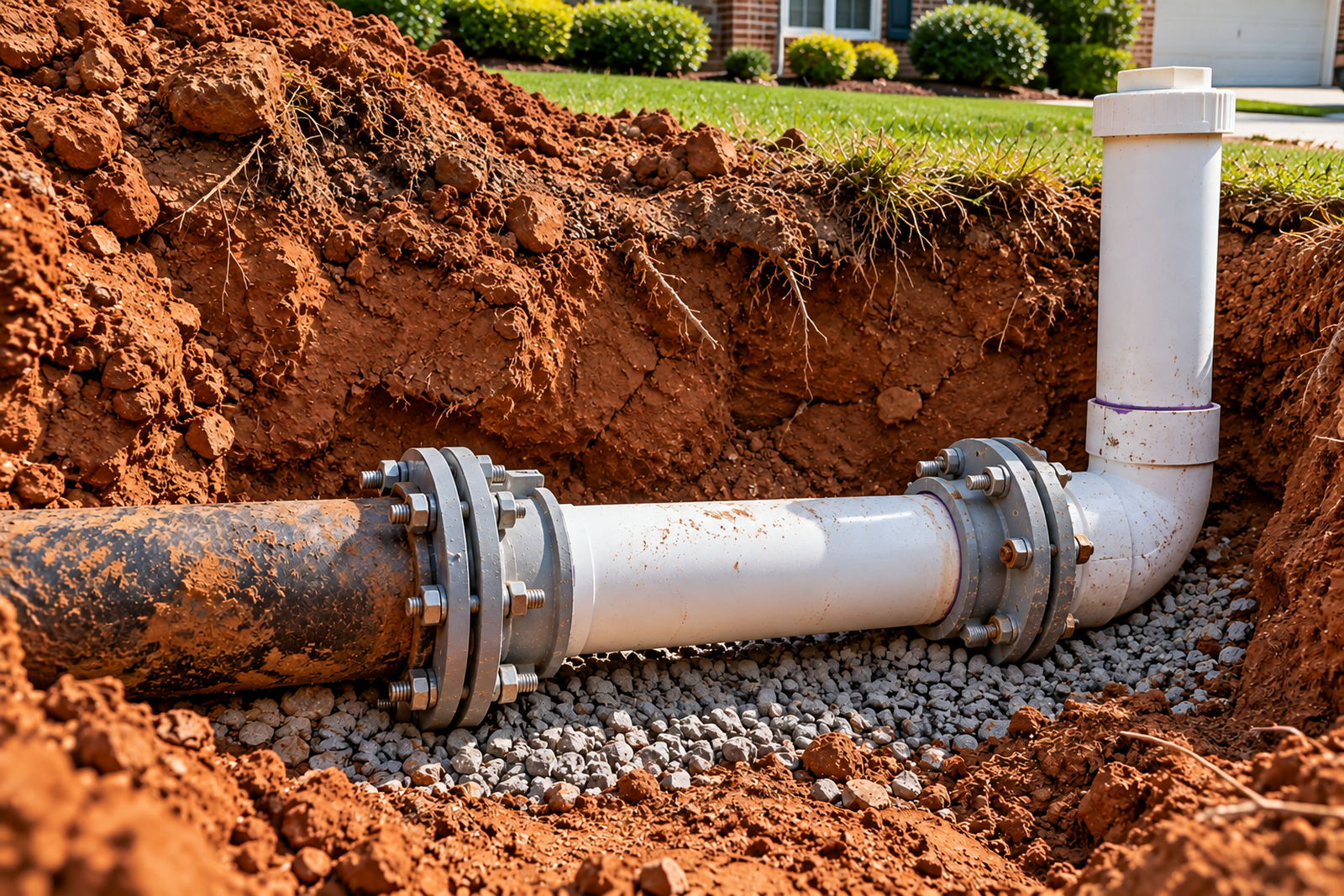
In a traditional repair, the damaged location is identified, the ground above it is opened, the bad section of pipe is cut out, and new pipe is installed in its place and tied back into the good pipe on either side. Because only the failed section is dug up, the disturbance stays limited to that spot rather than the full length of the line. That is the main reason repair is worth considering first when the rest of the pipe is in sound condition.
Repair is not always the right answer. A pipe with several problem areas, or one that is failing along most of its length, tends to point toward sewer line replacement instead. If you want the factors laid out side by side, see sewer line repair vs. replacement.
Failure Location & Diagnosis
The line is assessed on-site, and a camera inspection may be recommended when needed, so the repair is small and in the right spot.
Spot (Section) Repair
The damaged section is cut out and replaced with new pipe, joined to the existing line at both ends. Only the failed stretch is exposed.
Root Intrusion Damage
Roots can work into joints and cracks and widen them over time. Repair addresses the opening in the pipe itself, not just the roots inside it.
Offset & Separated Joints
When pipe sections shift apart, waste can leak into the soil and solids can catch. Realigning or replacing the joint restores flow.
Low Spots & Sags
A sag can hold water and solids and cause repeat backups. Whether a section repair can fix it depends on how long the low area is.
When Repair Isn't Enough
Damage along much of the line, or repeated failures, can make a series of repairs a poor investment compared with a full replacement.
What Shapes a Sewer Repair Project
Two sewer repairs can look similar from the surface and still be very different jobs underneath. These are the factors that usually decide the scope.
Marietta-area yards often have dense red clay, mature tree roots, and driveways, patios, or retaining walls close to the house, and all of those can affect how a repair is approached. What applies to your property is confirmed on-site.
- Depth of the Pipe
- Location of the Failure
- Pipe Material & Condition
- Access & Surface Restoration
- Permit & Inspection Steps
Underground Specialists
Focused on buried lines: water and sewer repair, replacement, and trenchless work.
Honest Scope
We help you understand whether a targeted repair is enough before anyone starts digging.
No-Pressure Contact
Reach out by phone, text, or form. There's no obligation to move forward.
Repair or Replace
If repair isn't the right call, we'll point you toward replacement or trenchless options.
 Tap to enlargeClick to enlarge
Related Underground Services
- Sewer Line ReplacementFull open-trench replacement when the sewer line is failing along its length.
- Trenchless Sewer Line RepairFixing a damaged sewer line with a new pipe installed alongside it, with minimal digging.
- Trenchless Sewer Line ReplacementInstalling a new sewer line alongside the old one with minimal yard disruption.
- Broken Underground Pipe RepairWhat to do first for a visibly surfacing break or sudden pressure loss.
- Underground Plumbing ServicesA full overview of our underground water-line repair, replacement, and leak-detection services.
Helpful Resources
Learn more about underground water lines in Marietta and make informed decisions about your project.
- Signs of a Broken Sewer Line: What Marietta Homeowners Should Watch ForThe indoor, yard, and drain warning signs of a broken or collapsing sewer line, and how to tell them apart from an ordinary clog.
- Sewer Line Repair vs. Replacement: How to DecideA factor-by-factor comparison to help weigh a targeted sewer repair against replacing the whole line.
- Sewer Line Repair and Replacement Costs: What Drives the PriceWhat changes the cost of a sewer repair or replacement, what an estimate should spell out, and how to compare quotes fairly.
- Marietta Water Line Permits: What's RequiredWhen a permit is required for water-line work in Marietta, who applies for it, and how to check whether City of Marietta or Cobb County rules apply.
Sewer Line Repair FAQ
Common questions about sewer line repair in Marietta.
Think Your Sewer Line Is Damaged?
Reach out and we'll help you work out whether a targeted repair fits your situation, with no obligation to move forward.
What a Sewer Line Repair Involves
Your sewer line, sometimes called the sewer lateral or building sewer, is the buried pipe that carries wastewater from your house to the public sewer. It runs on gravity, so it only works while it stays sealed, connected end to end, and sloped continuously downhill. A sewer line repair fixes a specific failure in that pipe: a crack, a joint that has pulled apart, a section pushed out of line, or a stretch damaged by roots.
In a traditional repair, the damaged location is identified, the ground above it is opened, the bad section of pipe is cut out, and new pipe is installed in its place and tied back into the good pipe on either side. Because only the failed section is dug up, the disturbance stays limited to that spot rather than the full length of the line. That is the main reason repair is worth considering first when the rest of the pipe is in sound condition.
Repair is not always the right answer. A pipe with several problem areas, or one that is failing along most of its length, tends to point toward sewer line replacement instead. If you want the factors laid out side by side, see sewer line repair vs. replacement.
Failure Location & Diagnosis
The line is assessed on-site, and a camera inspection may be recommended when needed, so the repair is small and in the right spot.
Spot (Section) Repair
The damaged section is cut out and replaced with new pipe, joined to the existing line at both ends. Only the failed stretch is exposed.
Root Intrusion Damage
Roots can work into joints and cracks and widen them over time. Repair addresses the opening in the pipe itself, not just the roots inside it.
Offset & Separated Joints
When pipe sections shift apart, waste can leak into the soil and solids can catch. Realigning or replacing the joint restores flow.
Low Spots & Sags
A sag can hold water and solids and cause repeat backups. Whether a section repair can fix it depends on how long the low area is.
When Repair Isn't Enough
Damage along much of the line, or repeated failures, can make a series of repairs a poor investment compared with a full replacement.
What Shapes a Sewer Repair Project
Two sewer repairs can look similar from the surface and still be very different jobs underneath. These are the factors that usually decide the scope.
Marietta-area yards often have dense red clay, mature tree roots, and driveways, patios, or retaining walls close to the house, and all of those can affect how a repair is approached. What applies to your property is confirmed on-site.
- Depth of the Pipe
- Location of the Failure
- Pipe Material & Condition
- Access & Surface Restoration
- Permit & Inspection Steps
Underground Specialists
Focused on buried lines: water and sewer repair, replacement, and trenchless work.
Honest Scope
We help you understand whether a targeted repair is enough before anyone starts digging.
No-Pressure Contact
Reach out by phone, text, or form. There's no obligation to move forward.
Repair or Replace
If repair isn't the right call, we'll point you toward replacement or trenchless options.
Tap to enlargeClick to enlargeRelated Underground Services
- Sewer Line ReplacementFull open-trench replacement when the sewer line is failing along its length.
- Trenchless Sewer Line RepairFixing a damaged sewer line with a new pipe installed alongside it, with minimal digging.
- Trenchless Sewer Line ReplacementInstalling a new sewer line alongside the old one with minimal yard disruption.
- Broken Underground Pipe RepairWhat to do first for a visibly surfacing break or sudden pressure loss.
- Underground Plumbing ServicesA full overview of our underground water-line repair, replacement, and leak-detection services.
Helpful Resources
Learn more about underground water lines in Marietta and make informed decisions about your project.
- Signs of a Broken Sewer Line: What Marietta Homeowners Should Watch ForThe indoor, yard, and drain warning signs of a broken or collapsing sewer line, and how to tell them apart from an ordinary clog.
- Sewer Line Repair vs. Replacement: How to DecideA factor-by-factor comparison to help weigh a targeted sewer repair against replacing the whole line.
- Sewer Line Repair and Replacement Costs: What Drives the PriceWhat changes the cost of a sewer repair or replacement, what an estimate should spell out, and how to compare quotes fairly.
- Marietta Water Line Permits: What's RequiredWhen a permit is required for water-line work in Marietta, who applies for it, and how to check whether City of Marietta or Cobb County rules apply.
Sewer Line Repair FAQ
Common questions about sewer line repair in Marietta.
How do I know if I need a sewer line repair?
Several fixtures draining slowly at once, gurgling, sewage odors, repeated backups in the lowest drain, or wet or sunken spots in the yard are common signs. Our guide to the signs of a broken sewer line covers what to look for. A single slow drain is more often a local clog than a sewer line problem.
Can part of a sewer line be repaired without replacing the whole thing?
Yes, when the damage is limited to one or two spots and the rest of the pipe is in sound condition. The damaged section is cut out and replaced, then joined to the good pipe on both sides.
Is a sewer line repair the same as clearing a clog?
No. Clearing a clog removes a blockage inside the pipe. A repair fixes physical damage to the pipe, such as a crack, a separated joint, or a collapsed section. A line that keeps clogging again after being cleared may have a damaged pipe underneath.
Do I need a permit for sewer line repair in Marietta?
The City of Marietta requires a plumbing permit for work on a plumbing system, and the license holder performing the work applies for it. Properties in unincorporated Cobb County follow a different process. See Marietta water line permits for how jurisdiction works.
Who is responsible for a broken sewer line, me or the city?
It depends on where the failure is. Generally the pipe on your property is the owner's responsibility. For City of Marietta sewer service, the city's own FAQ says the owner clears service line blockages even within a right-of-way or easement, while the city repairs a failed pipe within the public right-of-way or its own easement. Cobb County says ownership of sewer lines depends on recorded easements. Confirm with the utility that serves you.
Is trenchless an option instead of digging?
Sometimes. If the line needs to be replaced rather than repaired, a new pipe can sometimes be installed alongside the old one without a long open trench. See trenchless sewer line repair for how that works and what it depends on.
Think Your Sewer Line Is Damaged?
Reach out and we'll help you work out whether a targeted repair fits your situation, with no obligation to move forward.
Call (770) 676-1685