

Repair vs. Replace: How to Decide
A factor-by-factor comparison to help weigh a targeted spot repair against full water line replacement.
Why This Decision Matters
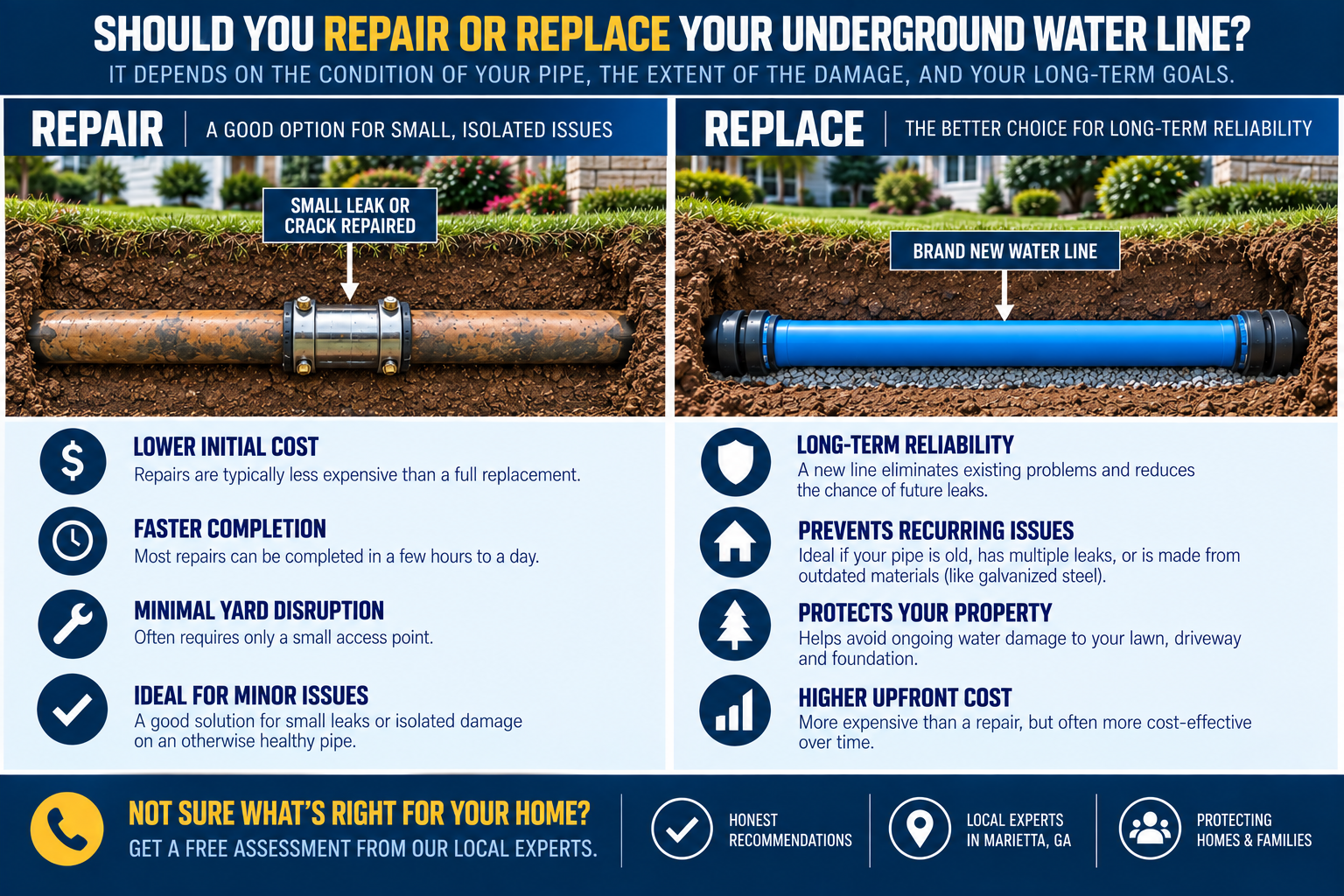
Once an underground water line leak is confirmed and located, the next question is whether to fix the specific problem or replace the line altogether. Both are legitimate options: a young line with one isolated break in durable material is usually worth repairing, while an old line, a history of repeat failures, or damage spread across more than one spot generally tips the scale toward replacement.
The Factors That Matter Most
Line age, pipe material, number of prior repairs, and the extent and location of damage are the factors that most consistently point toward repair or replacement.
- Line age: young and otherwise sound favors repair; old or near end-of-life favors replacement
- Material: modern plastic (PEX/HDPE) or sound copper favors repair; older galvanized steel favors replacement
- Prior repairs: a first-time issue favors repair; more than one repair, especially in different spots, favors replacement
- Damage extent: a single isolated break favors repair; damage spread across multiple points favors replacement
Pipe Material
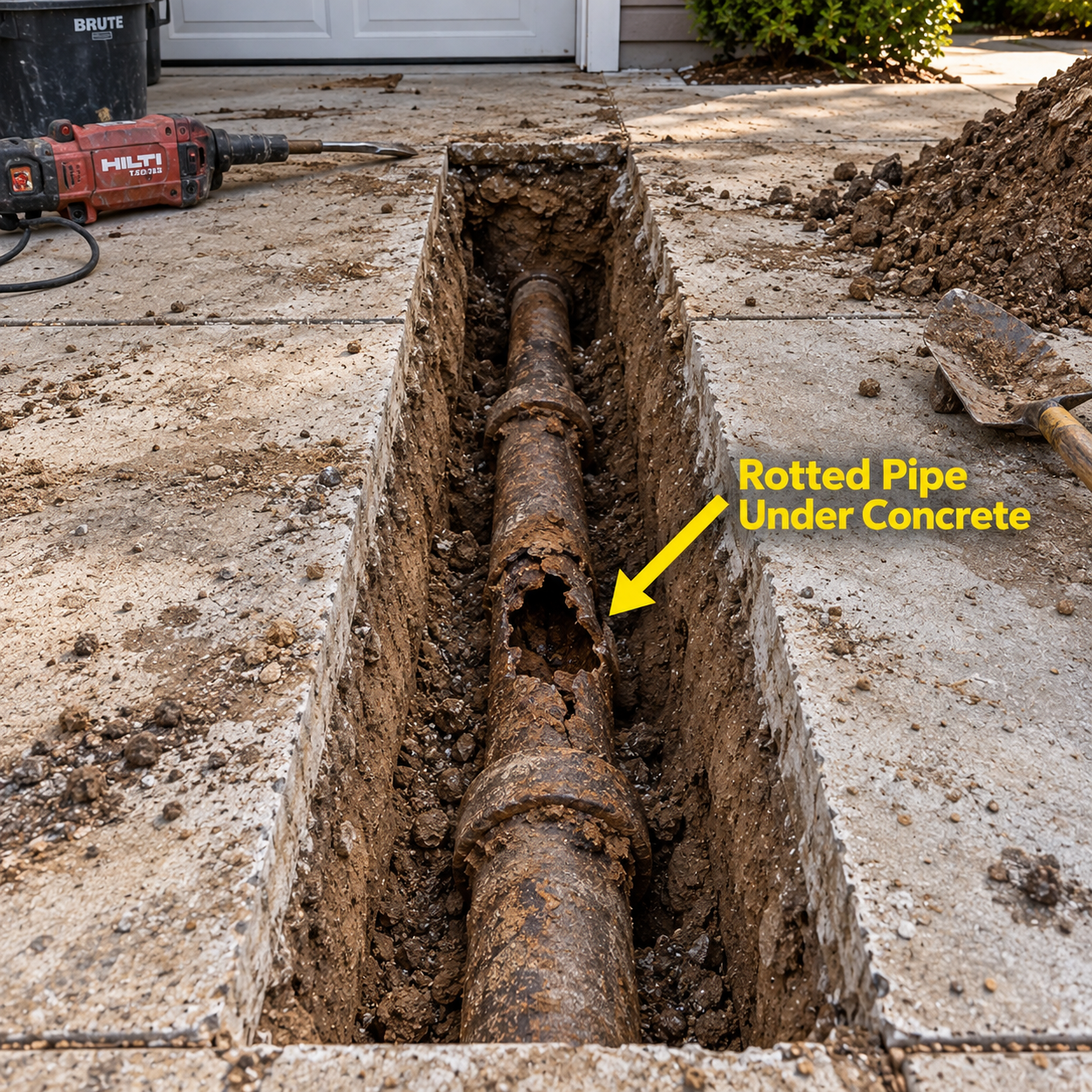
Material plays a large role in how a line ages. Galvanized steel, common in older installations, corrodes from the inside over time — once one section has corroded enough to fail, nearby sections are often not far behind, which is why repeated failures are common on aging galvanized lines. Copper generally holds up longer, and modern plastic materials like PEX or HDPE typically have long service lives.
Number of Prior Repairs
A line that has already needed more than one repair, even in different locations, is telling you something about its overall condition, not just about the specific spots that failed. At that point, continuing to repair individual breaks as they occur can end up costing more over time than addressing the line as a whole.
Making the Call
In practice, this decision follows from what's actually found once the line is diagnosed and inspected, not from guessing based on the age of the house alone. Underground water line repair covers how diagnosis works, and main water line replacement covers what full replacement looks like. It's also worth understanding your excavation options — see trenchless vs. open-trench replacement.
Related Underground Services
- Underground Water Line RepairSymptoms, diagnosis, and repair options for a failing underground water line.
- Main Water Line RepairSpot repair on the main service line when whole-house pressure or supply drops.
- Main Water Line ReplacementFull line replacement, open-trench or trenchless, when repair no longer makes sense.
Related Underground Services
- Underground Water Line RepairSymptoms, diagnosis, and repair options for a failing underground water line.
- Main Water Line RepairSpot repair on the main service line when whole-house pressure or supply drops.
- Main Water Line ReplacementFull line replacement, open-trench or trenchless, when repair no longer makes sense.
Helpful Resources
Learn more about underground water lines in Marietta and make informed decisions about your project.
- Signs of an Underground Water Line LeakA room-by-room and yard checklist for recognizing an underground water line leak before it becomes a bigger repair.
- Trenchless vs. Open Trench Water Line ReplacementHow trenchless and open-trench water line replacement actually compare — landscaping impact, scope of excavation, and when each is the right fit.
- Marietta Water Line Permits: What's RequiredWhen a permit is required for water-line work in Marietta, who applies for it, and how to check whether City of Marietta or Cobb County rules apply.
- Sewer Line Repair vs. Replacement: How to DecideA factor-by-factor comparison to help weigh a targeted sewer repair against replacing the whole line.
Repair vs. Replace: FAQ
Common questions about deciding between repair and replacement.
Repair vs. Replace: FAQ
Common questions about deciding between repair and replacement.
Is repair always cheaper than replacement?
A single spot repair typically costs less up front than replacing the whole line, but cost isn't the only factor worth weighing. If the line is old or already failed once, a spot repair can end up being the first of several repairs over time.
Does one repair mean the whole line needs to be replaced?
Not necessarily. A single, isolated break on an otherwise sound line — especially a newer or more durable material — is often a reasonable candidate for a targeted repair rather than full replacement.
What water line materials tend to need replacement sooner?
Older galvanized steel lines are more prone to internal corrosion over time. Copper and modern plastic piping generally have longer service lives, though any material can eventually need replacement.
Who decides whether a repair or replacement is the right call?
The decision usually follows from what's found during diagnosis and line inspection — the location and extent of the damage, the pipe material, and the line's overall condition.
Can trenchless methods be used for either repair or replacement?
Trenchless methods apply to replacement rather than a targeted spot repair — they install or line a new pipe through small access points. See trenchless water line replacement for how that compares to open-trench replacement.
How long does underground water line repair or replacement typically take?
It depends on the line's length, depth, access, and whether the job is a targeted spot repair or a full replacement. A site assessment after diagnosis is the only reliable way to estimate timing for a specific property.
Weighing Repair vs. Replacement?
Reach out and we'll help you understand which direction fits your line — no obligation to move forward.
Weighing Repair vs. Replacement?
Reach out and we'll help you understand which direction fits your line — no obligation to move forward.
Call (770) 676-1685