
Sewer Line Repair vs. Replacement
The factors that point toward a targeted repair and the ones that point toward replacing the whole line.
Why This Decision Matters
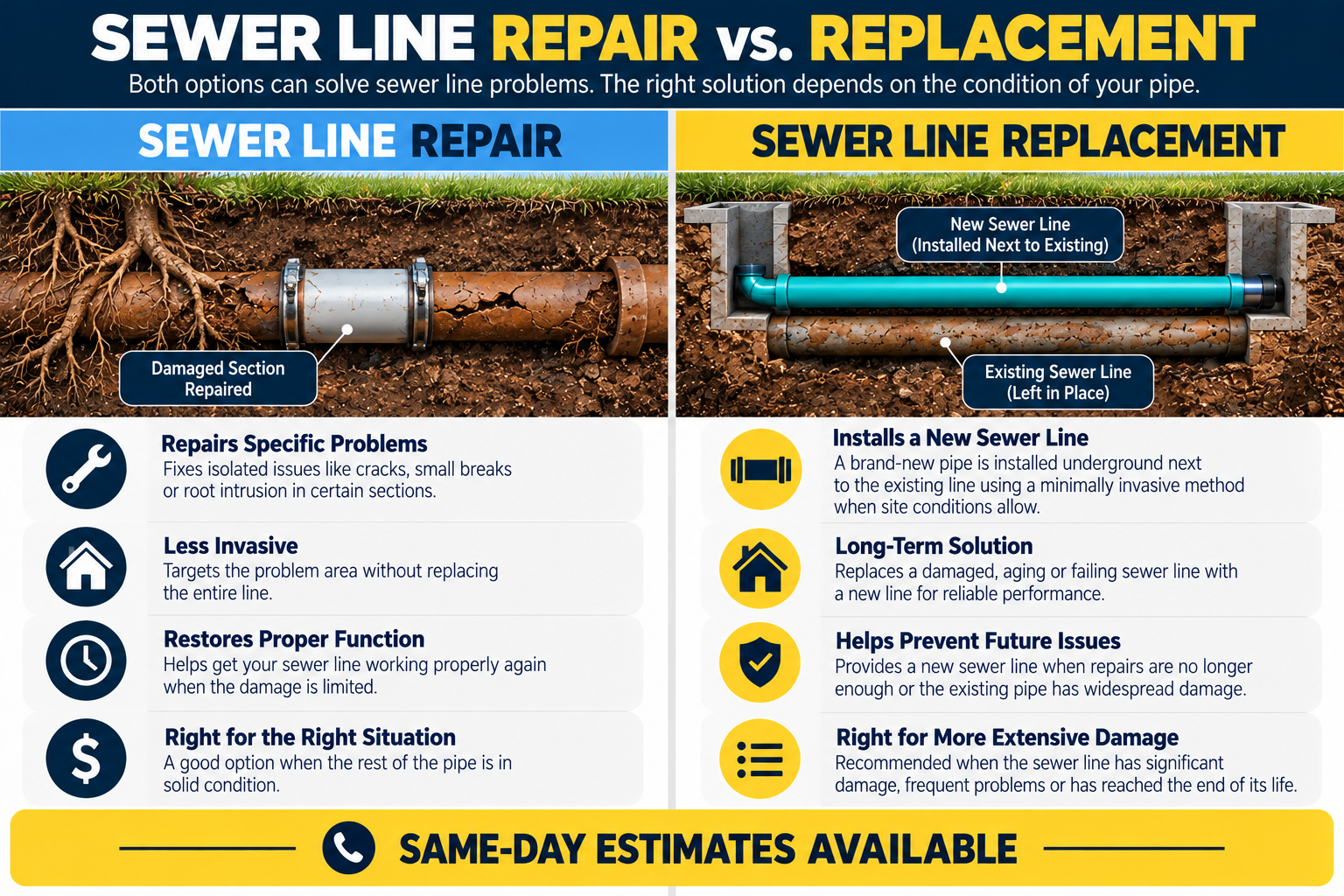
Once a sewer line problem is confirmed and located, the question becomes whether to fix the damaged spot or replace the line. Both are legitimate. A single break in a pipe that is otherwise sound is usually a repair candidate. A pipe that is failing in several places, or along most of its length, is usually a replacement candidate.
The right answer comes from what is found inside the line, not from the age of the house alone. This guide covers the factors that matter, how each one points, and where sewer line repair and sewer line replacement fit.
The Factors That Matter Most
Five factors do most of the work in this decision. None decides it alone, but together they usually make the answer clear.
- Number of defects: one isolated defect favors repair; several defects or defects along a long stretch favor replacement
- Pipe material and condition: sound modern pipe favors repair; deteriorating or fragile material favors replacement
- Slope: a short sag may be correctable; a long or severe sag favors replacement
- History: a first problem favors repair; repeated repairs and backups favor replacement
- Collapse: a fully collapsed section often means replacing at least that run, and sometimes the line
Pipe Material
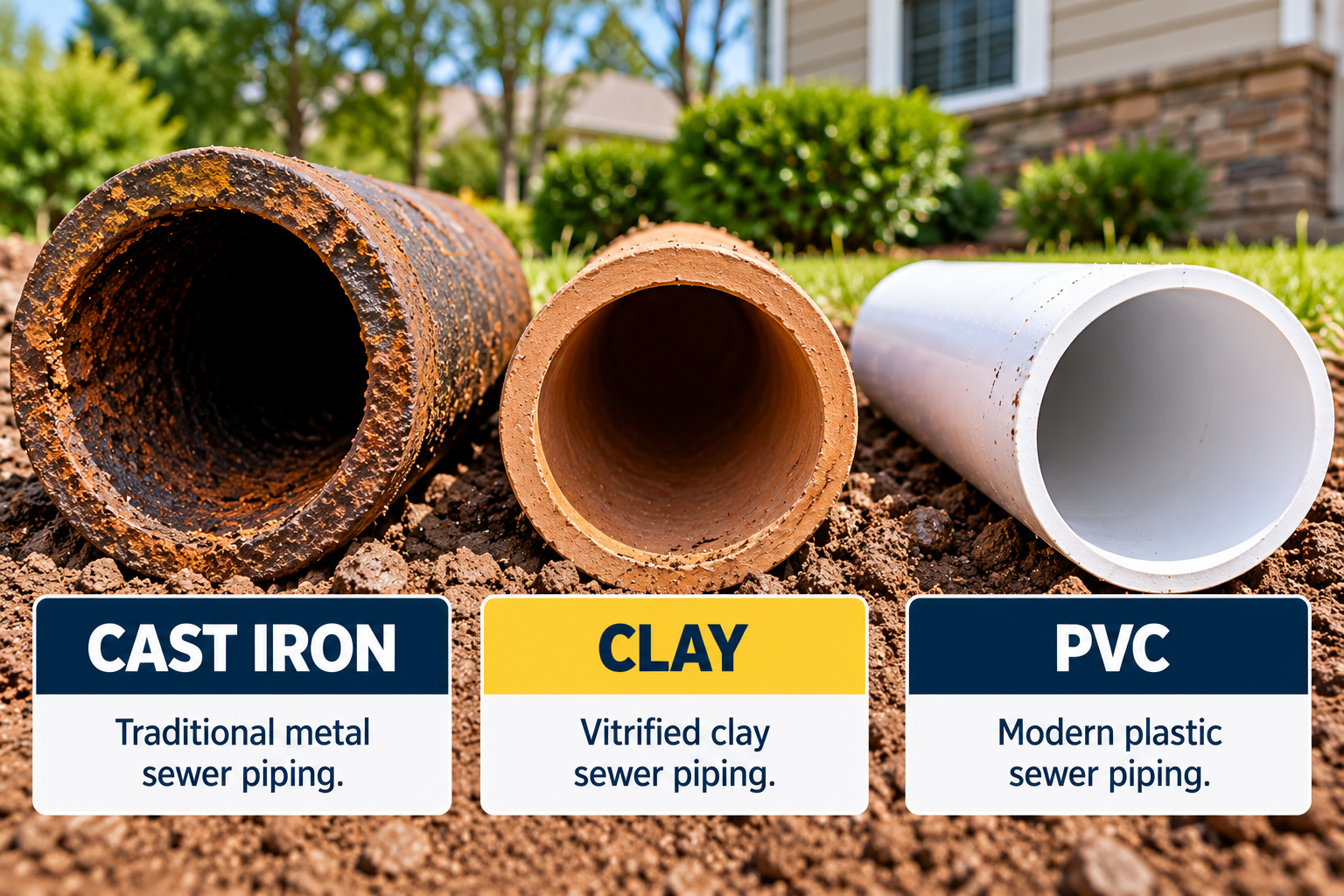
Older homes in the area may have sewer laterals made of cast iron, clay, concrete, or a fiber material, while newer lines are usually plastic. Each ages in its own way. Cast iron can corrode and scale from the inside, clay pipe is joined in short sections with many joints that roots can find, and fiber pipe can soften and deform over time. Plastic pipe tends to hold up well but can still be cracked, crushed, or misaligned.
The age of the house alone doesn't tell you what's in the ground. Lines are sometimes replaced or repaired over the years. The material and condition are confirmed by looking inside and by exposing the pipe, not assumed.
One Defect or Many?
The on-site assessment, along with a camera inspection when one is recommended, shows how many problems there are and how they're spread out. A single cracked section or one offset joint, with good pipe on both sides, is a natural fit for repair. A line with several root-filled joints, multiple cracks, or damage that continues from one end to the other is telling you something about its overall condition, and repairing one spot only leaves the next one waiting.
Sags and Low Spots
Sewer lines depend on a steady downhill slope. A low spot, sometimes called a belly, collects water and solids and tends to cause repeat clogs even when the pipe isn't cracked. A short sag can sometimes be corrected with a localized repair that re-establishes the grade. A long or deep sag is usually better addressed by replacing the run, since the grade has to be reset along its whole length.
Repeat Repairs and Repeat Backups
If this line has already been repaired or cleaned several times for the same problem, continuing that pattern can end up costing more than renewing the line. The same applies if the line is a recurring cause of backups after cleaning. The first repair on a young line is a very different situation from the third repair on an old one.
Then Choose the Method
Deciding between repair and replacement is separate from choosing how the work is done. Either can be performed by conventional excavation, and replacement can sometimes be done trenchlessly, by installing a new pipe alongside the old one with minimal digging. The guide to trenchless vs. traditional sewer repair covers that second decision, and the cost guide covers what changes the price.
Making the Call
In practice the decision follows from what is found when the line is inspected and located. If you're weighing the two, start with an assessment of the line's condition, then compare the scope of each option for your property. Trenchless sewer line repair and trenchless sewer line replacement are worth asking about if you want to limit digging.
 Tap to enlargeClick to enlarge
Related Underground Services
- Sewer Line RepairTargeted repair of a cracked, offset, or root-damaged section of sewer line.
- Sewer Line ReplacementFull open-trench replacement when the sewer line is failing along its length.
- Trenchless Sewer Line RepairFixing a damaged sewer line with a new pipe installed alongside it, with minimal digging.
- Trenchless Sewer Line ReplacementInstalling a new sewer line alongside the old one with minimal yard disruption.
Related Underground Services
- Sewer Line RepairTargeted repair of a cracked, offset, or root-damaged section of sewer line.
- Sewer Line ReplacementFull open-trench replacement when the sewer line is failing along its length.
- Trenchless Sewer Line RepairFixing a damaged sewer line with a new pipe installed alongside it, with minimal digging.
- Trenchless Sewer Line ReplacementInstalling a new sewer line alongside the old one with minimal yard disruption.
Helpful Resources
Learn more about underground water lines in Marietta and make informed decisions about your project.
- Signs of a Broken Sewer Line: What Marietta Homeowners Should Watch ForThe indoor, yard, and drain warning signs of a broken or collapsing sewer line, and how to tell them apart from an ordinary clog.
- Trenchless vs. Traditional Sewer Repair: What's the Difference?How trenchless sewer work compares with traditional excavation, and what makes a property a fit for either.
- Sewer Line Repair and Replacement Costs: What Drives the PriceWhat changes the cost of a sewer repair or replacement, what an estimate should spell out, and how to compare quotes fairly.
- Repair vs. Replace: How to Decide on Your Main Water LineA factor-by-factor comparison to help weigh a targeted spot repair against full water line replacement.
Sewer Repair vs. Replacement: FAQ
Common questions about deciding between sewer line repair and replacement.
Sewer Repair vs. Replacement: FAQ
Common questions about deciding between sewer line repair and replacement.
Is repair always cheaper than replacement?
A single repair typically costs less up front than replacing the full line, but cost isn't the only factor. If the line is in poor condition throughout, a repair can be the first of several over time.
Does one cracked section mean the whole line needs replacing?
Not necessarily. A single isolated defect on an otherwise sound line is often a reasonable candidate for a targeted repair.
What sewer pipe materials tend to need replacement sooner?
Older cast iron, clay, and fiber pipe are generally more likely to show widespread deterioration, but it varies by the individual line. Modern plastic pipe usually lasts longer.
Who decides which is the right call?
The decision follows from what the inspection finds: where the damage is, how much there is, the pipe material, and the slope of the line.
Can trenchless methods be used for both?
Trenchless installation is a way to replace a line with less digging, by installing a new pipe alongside the existing one. It applies when the line needs replacing rather than a small spot repair, and not every property qualifies. See trenchless sewer line repair and trenchless sewer line replacement.
Can I just keep clearing the line instead?
Cleaning removes blockages but doesn't fix a damaged pipe. If clogs keep returning, the pipe itself is probably what needs attention.
Weighing Repair vs. Replacement?
Reach out and we'll help you understand which direction fits your sewer line, with no obligation to move forward.
Weighing Repair vs. Replacement?
Reach out and we'll help you understand which direction fits your sewer line, with no obligation to move forward.
Call (770) 676-1685