
Trenchless Sewer Line Repair in Marietta, GA
A damaged sewer line doesn't always mean a long trench across your yard. Here's how trenchless repair works, what it is and isn't, and how to tell if your property is a fit.
What Trenchless Sewer Repair Means Here
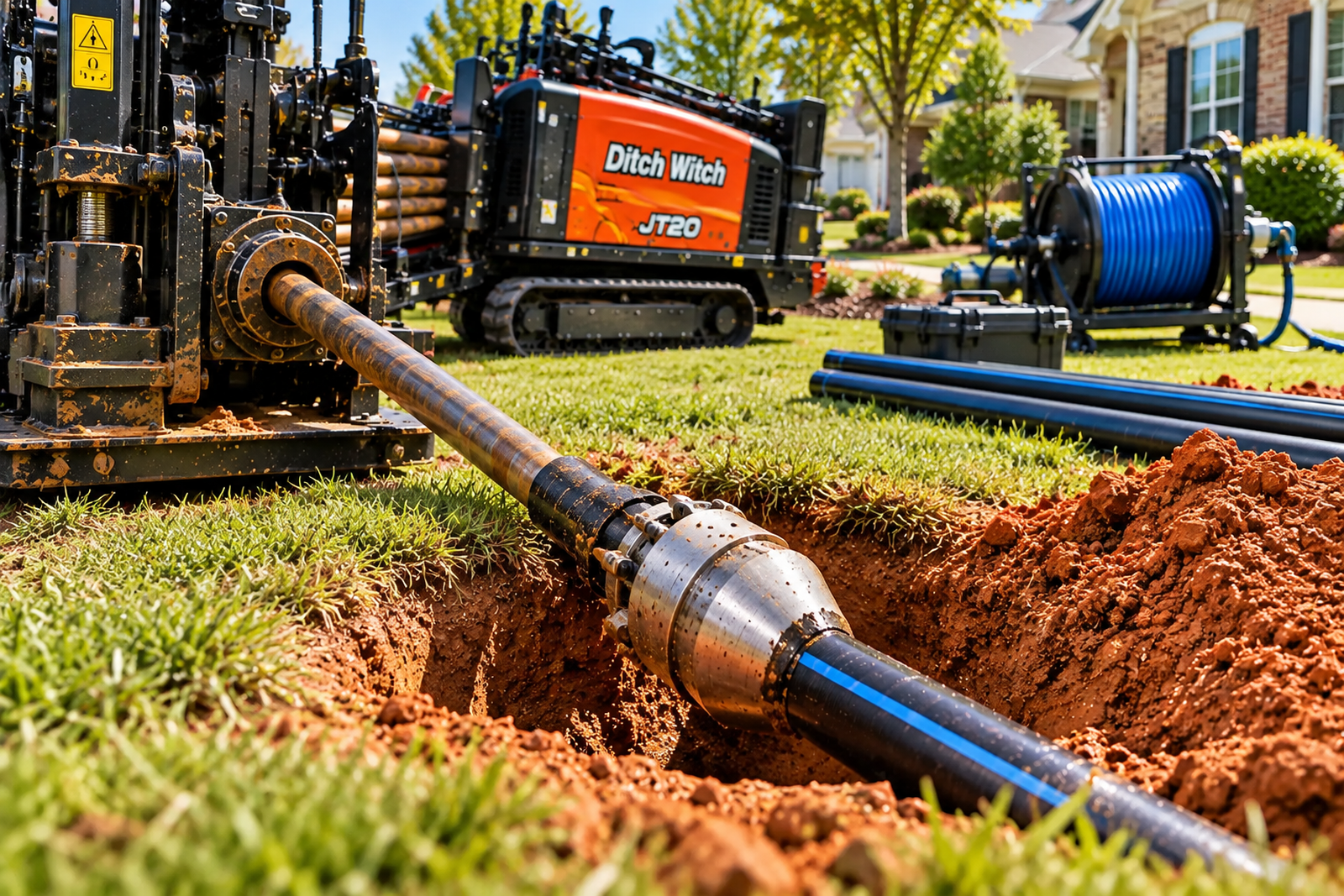
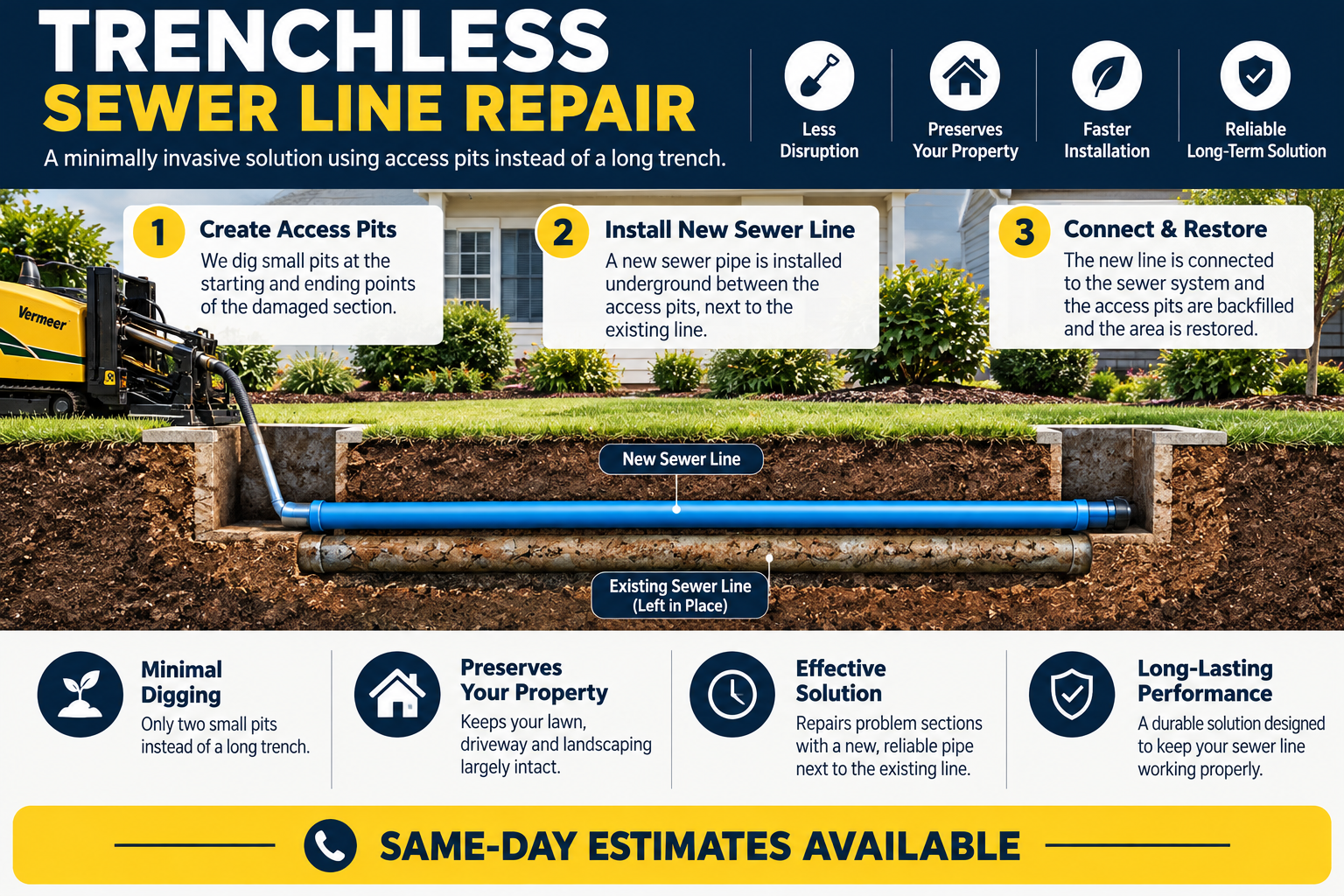
Not every damaged sewer line has to be fixed by digging a long trench through the yard. When a sewer line is damaged and the property allows it, a brand-new sewer pipe can be installed alongside the existing line using a minimally invasive method, then connected into the sewer system. That is what trenchless sewer line repair means here: fixing the problem while keeping the digging to a minimum.
Sewer lines are repaired or replaced depending on their condition. A small, isolated problem may only need a conventional spot repair, while a line that is failing along its length is usually better served by a new pipe. Trenchless installation is a way to do the second kind of job with less disruption to your lawn, driveway, and landscaping. We don't offer pipe lining (also called cured-in-place or epoxy lining). The work here is installing new pipe.
The problem is assessed on-site first, and a camera inspection may be recommended when it's needed to understand what's wrong. If you already know the whole line needs replacing, trenchless sewer line replacement covers the project in more detail. If the failure is a single spot in an open area, a conventional sewer line repair may be simpler. The guide to trenchless vs. traditional sewer repair compares the options.
Is Trenchless a Good Fit?
The first step is an on-site look at the line and its surroundings. Whether trenchless works depends on your property, never assumed in advance.
Access Pits, Not a Trench
Digging is limited to small access areas rather than the full length of the line, which leaves most of your yard and landscaping untouched.
New Pipe, Not a Liner
A brand-new sewer pipe is installed alongside the existing line and connected into the sewer system. The existing pipe isn't relined or coated.
Protecting What's Above
Driveways, walkways, mature trees, and landscaping above the line are a common reason homeowners ask whether trenchless is an option.
When Trenchless May Not Fit
Limited room beside the line, crowded utilities, or difficult ground can make conventional digging the better choice. Not every line qualifies.
Cost Compared to Digging
Trenchless equipment and setup aren't free. Savings on restoration may offset them, or may not. It depends entirely on your property.
How Trenchless Repair Is Typically Approached
Every property is different, but a trenchless sewer repair generally follows the same outline.
Whether your line can be addressed this way, and from where, is determined on-site. We don't assume it for any property in advance.
- Assess the Problem
- Utility Locates & Permit
- Dig Small Access Points
- Install the New Pipe
- Test, Inspect & Restore
Underground Specialists
Focused on buried lines: water and sewer repair, replacement, and trenchless work.
Plain-Language Scope
We say clearly what trenchless means here and what it doesn't, so quotes are easy to compare.
Honest About Fit
If your property isn't a good trenchless candidate, we'll say so and point you to a conventional option.
No-Pressure Contact
Reach out by phone, text, or form. There's no obligation to move forward.
 Tap to enlargeClick to enlarge
Related Underground Services
- Trenchless Sewer Line ReplacementInstalling a new sewer line alongside the old one with minimal yard disruption.
- Sewer Line RepairTargeted repair of a cracked, offset, or root-damaged section of sewer line.
- Sewer Line ReplacementFull open-trench replacement when the sewer line is failing along its length.
- Trenchless Water Line ReplacementReplacing a line through small access points instead of a full open trench.
- Directional BoringInstalling a new line under a driveway or hardscaping without tearing it up.
Helpful Resources
Learn more about underground water lines in Marietta and make informed decisions about your project.
- Trenchless vs. Traditional Sewer Repair: What's the Difference?How trenchless sewer work compares with traditional excavation, and what makes a property a fit for either.
- Signs of a Broken Sewer Line: What Marietta Homeowners Should Watch ForThe indoor, yard, and drain warning signs of a broken or collapsing sewer line, and how to tell them apart from an ordinary clog.
- Sewer Line Repair vs. Replacement: How to DecideA factor-by-factor comparison to help weigh a targeted sewer repair against replacing the whole line.
- Sewer Line Repair and Replacement Costs: What Drives the PriceWhat changes the cost of a sewer repair or replacement, what an estimate should spell out, and how to compare quotes fairly.
Trenchless Sewer Line Repair FAQ
Common questions about trenchless sewer line repair in Marietta.
Want to Avoid Digging Up the Yard?
Reach out and we'll help determine whether your sewer line is a trenchless candidate, with no obligation to move forward.
What Trenchless Sewer Repair Means Here
Not every damaged sewer line has to be fixed by digging a long trench through the yard. When a sewer line is damaged and the property allows it, a brand-new sewer pipe can be installed alongside the existing line using a minimally invasive method, then connected into the sewer system. That is what trenchless sewer line repair means here: fixing the problem while keeping the digging to a minimum.
Sewer lines are repaired or replaced depending on their condition. A small, isolated problem may only need a conventional spot repair, while a line that is failing along its length is usually better served by a new pipe. Trenchless installation is a way to do the second kind of job with less disruption to your lawn, driveway, and landscaping. We don't offer pipe lining (also called cured-in-place or epoxy lining). The work here is installing new pipe.
The problem is assessed on-site first, and a camera inspection may be recommended when it's needed to understand what's wrong. If you already know the whole line needs replacing, trenchless sewer line replacement covers the project in more detail. If the failure is a single spot in an open area, a conventional sewer line repair may be simpler. The guide to trenchless vs. traditional sewer repair compares the options.
Is Trenchless a Good Fit?
The first step is an on-site look at the line and its surroundings. Whether trenchless works depends on your property, never assumed in advance.
Access Pits, Not a Trench
Digging is limited to small access areas rather than the full length of the line, which leaves most of your yard and landscaping untouched.
New Pipe, Not a Liner
A brand-new sewer pipe is installed alongside the existing line and connected into the sewer system. The existing pipe isn't relined or coated.
Protecting What's Above
Driveways, walkways, mature trees, and landscaping above the line are a common reason homeowners ask whether trenchless is an option.
When Trenchless May Not Fit
Limited room beside the line, crowded utilities, or difficult ground can make conventional digging the better choice. Not every line qualifies.
Cost Compared to Digging
Trenchless equipment and setup aren't free. Savings on restoration may offset them, or may not. It depends entirely on your property.
How Trenchless Repair Is Typically Approached
Every property is different, but a trenchless sewer repair generally follows the same outline.
Whether your line can be addressed this way, and from where, is determined on-site. We don't assume it for any property in advance.
- Assess the Problem
- Utility Locates & Permit
- Dig Small Access Points
- Install the New Pipe
- Test, Inspect & Restore
Underground Specialists
Focused on buried lines: water and sewer repair, replacement, and trenchless work.
Plain-Language Scope
We say clearly what trenchless means here and what it doesn't, so quotes are easy to compare.
Honest About Fit
If your property isn't a good trenchless candidate, we'll say so and point you to a conventional option.
No-Pressure Contact
Reach out by phone, text, or form. There's no obligation to move forward.
Tap to enlargeClick to enlargeRelated Underground Services
- Trenchless Sewer Line ReplacementInstalling a new sewer line alongside the old one with minimal yard disruption.
- Sewer Line RepairTargeted repair of a cracked, offset, or root-damaged section of sewer line.
- Sewer Line ReplacementFull open-trench replacement when the sewer line is failing along its length.
- Trenchless Water Line ReplacementReplacing a line through small access points instead of a full open trench.
- Directional BoringInstalling a new line under a driveway or hardscaping without tearing it up.
Helpful Resources
Learn more about underground water lines in Marietta and make informed decisions about your project.
- Trenchless vs. Traditional Sewer Repair: What's the Difference?How trenchless sewer work compares with traditional excavation, and what makes a property a fit for either.
- Signs of a Broken Sewer Line: What Marietta Homeowners Should Watch ForThe indoor, yard, and drain warning signs of a broken or collapsing sewer line, and how to tell them apart from an ordinary clog.
- Sewer Line Repair vs. Replacement: How to DecideA factor-by-factor comparison to help weigh a targeted sewer repair against replacing the whole line.
- Sewer Line Repair and Replacement Costs: What Drives the PriceWhat changes the cost of a sewer repair or replacement, what an estimate should spell out, and how to compare quotes fairly.
Trenchless Sewer Line Repair FAQ
Common questions about trenchless sewer line repair in Marietta.
Is trenchless sewer repair the same as pipe lining?
No. Pipe lining (also called cured-in-place or epoxy lining) coats the inside of the existing pipe, and we don't offer it. We also don't do pipe bursting, which breaks up the old pipe in place. Our trenchless work installs a brand-new pipe alongside the existing line and connects it into the sewer system.
What is the difference between trenchless repair and trenchless replacement?
They use the same minimally invasive installation. This page is for homeowners who are starting with a damaged line and want to know how to fix it without a large excavation. The trenchless sewer line replacement page covers the replacement project itself in more detail. Which one applies depends on the condition of your line.
Does my sewer line qualify for trenchless repair?
Not every line does. It depends on your property: how much room there is beside the line, what other utilities are nearby, and the ground itself. The line is assessed on-site first, and if trenchless isn't a good fit, conventional repair or replacement is the alternative.
Do I need a camera inspection first?
Not always. We assess the problem on-site first and determine whether a camera inspection is needed to understand what's wrong. If it is, one can be done or arranged. It isn't something every customer needs.
Is trenchless sewer repair more expensive than digging?
It depends on the property. Equipment and setup have costs of their own, and savings on surface restoration vary a lot. A site assessment is the only reliable way to compare for your line.
Will it work under a driveway, a tree, or a patio?
That is one of the most common reasons homeowners ask about it, and trenchless can often avoid digging up those areas. Whether it works for your property is confirmed on-site.
Want to Avoid Digging Up the Yard?
Reach out and we'll help determine whether your sewer line is a trenchless candidate, with no obligation to move forward.
Call (770) 676-1685