
Trenchless vs. Open Trench Water Line Replacement
How trenchless and open-trench water line replacement actually compare — landscaping impact, scope of excavation, and when each is the right fit.
Two Different Ways to Replace a Water Line
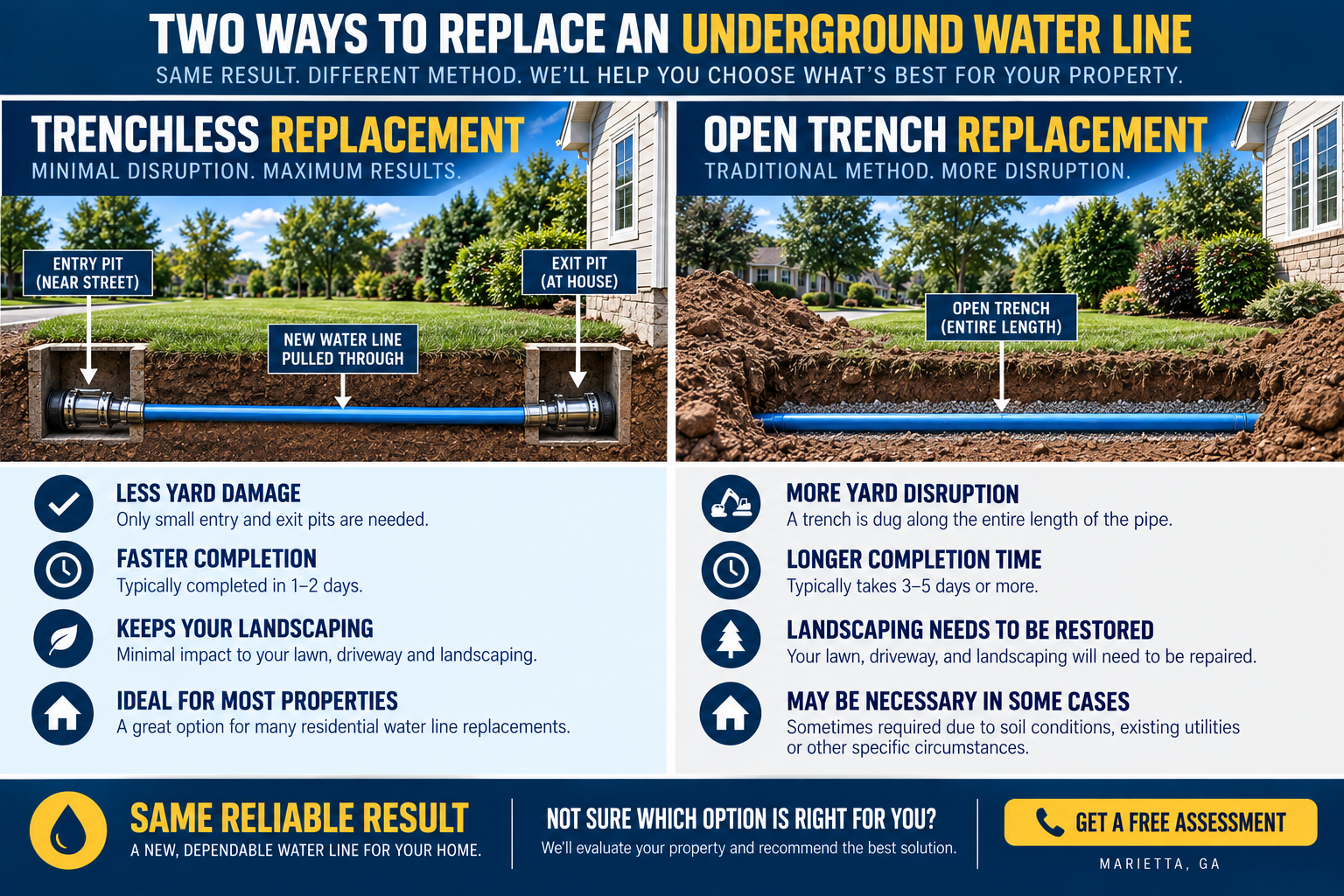
When a water line needs full replacement rather than a spot repair, there are two general approaches: open-trench excavation, which digs a continuous trench along the line's path, and trenchless replacement, which installs a new line through small access points without opening up the ground in between. Neither is universally “better.”
Yard and Landscaping Disruption
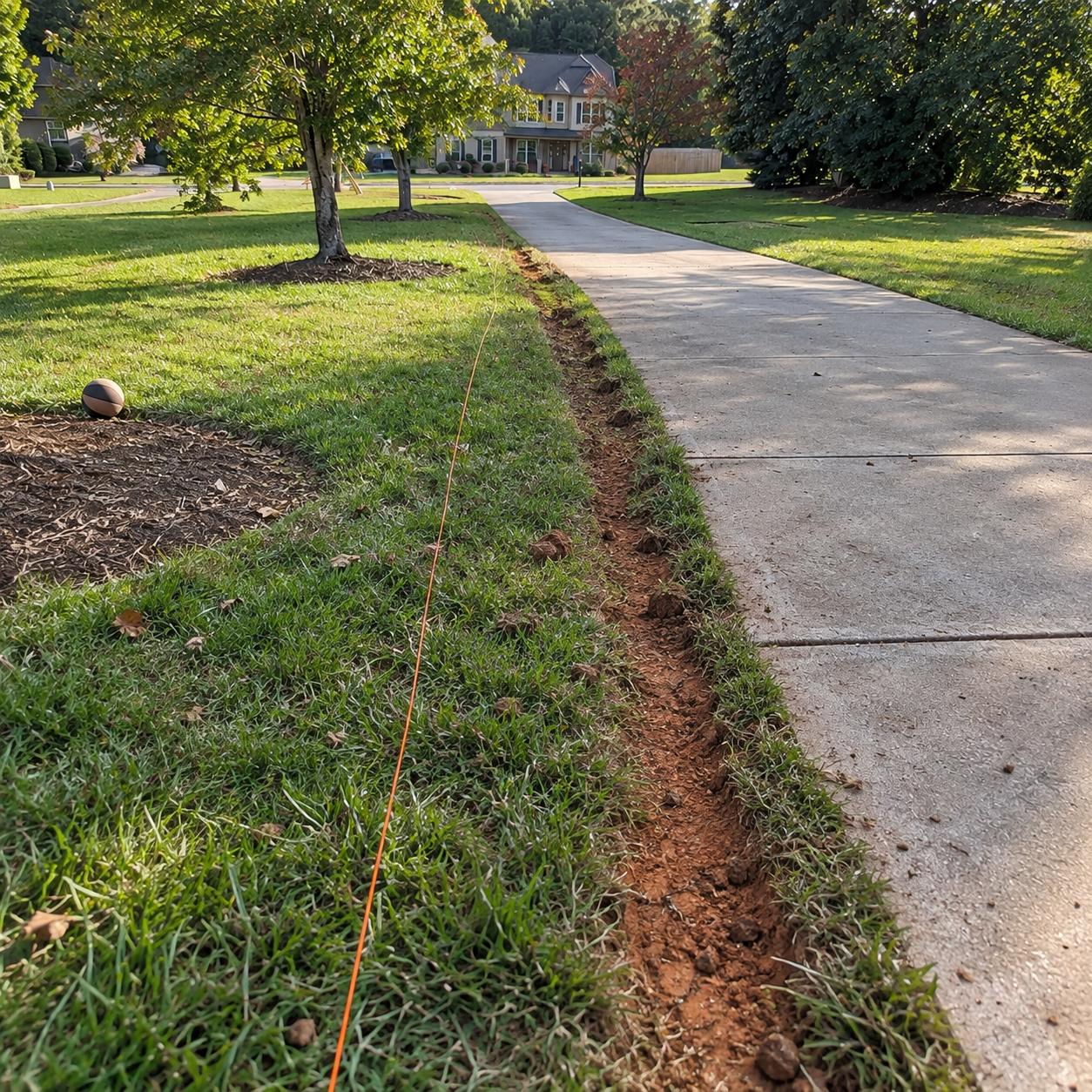
Open-trench replacement disturbs the ground along the entire path the line takes from the meter to the house, which can mean temporarily removing grass, garden beds, or other landscaping. Trenchless replacement is specifically designed to limit disruption to two smaller access points, leaving the ground between them intact.
Driveway and Hardscape Impact
If the water line's path crosses a driveway, walkway, or other paved area, open-trench work typically means cutting through that surface and patching it afterward. Trenchless methods can often route around this by pulling the new line underneath it.
Candidacy: Trenchless Isn't Right for Every Situation
A few situations still tend to call for open-trench excavation instead: certain difficult soil conditions, limited room beside the line, or obstructions like other buried utilities or tree roots near the line's path. Which method actually applies to a given property is typically determined after the line is located and its condition assessed.
- Limited room beside the existing line
- Highly rocky, unstable, or otherwise difficult soil
- Obstructions like buried utilities or tree roots along the path
Deciding Between Them
If you're still weighing whether replacement is even the right call versus a targeted repair, repair vs. replace: how to decide covers that earlier decision. Once replacement is the direction, trenchless water line replacement and main water line replacement cover what each approach involves. As with any work on the line, replacement in Marietta requires a plumbing permit — see Marietta water line permits.
Related Underground Services
- Trenchless Water Line ReplacementReplacing a line through small access points instead of a full open trench.
- Directional BoringInstalling a new line under a driveway or hardscaping without tearing it up.
- Main Water Line ReplacementFull line replacement, open-trench or trenchless, when repair no longer makes sense.
- Trenchless Sewer Line ReplacementInstalling a new sewer line alongside the old one with minimal yard disruption.
Related Underground Services
- Trenchless Water Line ReplacementReplacing a line through small access points instead of a full open trench.
- Directional BoringInstalling a new line under a driveway or hardscaping without tearing it up.
- Main Water Line ReplacementFull line replacement, open-trench or trenchless, when repair no longer makes sense.
- Trenchless Sewer Line ReplacementInstalling a new sewer line alongside the old one with minimal yard disruption.
Helpful Resources
Learn more about underground water lines in Marietta and make informed decisions about your project.
- Repair vs. Replace: How to Decide on Your Main Water LineA factor-by-factor comparison to help weigh a targeted spot repair against full water line replacement.
- Signs of an Underground Water Line LeakA room-by-room and yard checklist for recognizing an underground water line leak before it becomes a bigger repair.
- Marietta Water Line Permits: What's RequiredWhen a permit is required for water-line work in Marietta, who applies for it, and how to check whether City of Marietta or Cobb County rules apply.
- Trenchless vs. Traditional Sewer Repair: What's the Difference?How trenchless sewer work compares with traditional excavation, and what makes a property a fit for either.
Trenchless vs. Open Trench: FAQ
Common questions comparing the two replacement methods.
Trenchless vs. Open Trench: FAQ
Common questions comparing the two replacement methods.
Is trenchless replacement always better than open trench?
Not always — it's better suited to some situations than others. Trenchless methods generally reduce surface disruption, but certain conditions, like limited room beside the line or specific soil issues, can still call for open-trench excavation instead.
Does a badly damaged pipe rule out trenchless replacement?
Not necessarily. Because the new line is installed alongside the old one rather than through it, the old pipe doesn't have to be intact. Whether trenchless fits still depends on the property's access, nearby utilities, and ground conditions.
Does trenchless replacement mean no digging at all?
No — trenchless methods still require small access points at each end of the line. The difference is that the ground between those two points isn't opened up along the way.
How do I know which method is right for my property?
That depends on the line's condition, its path, and site-specific factors like soil conditions and any nearby obstructions or utilities — typically assessed after the line has been located and inspected.
Does trenchless water line replacement work in clay soil?
Trenchless methods are commonly used in clay-heavy soils, though every property's specific soil and site conditions still need individual assessment before confirming candidacy.
Is directional boring the same as trenchless water line replacement?
They're related but not identical. Trenchless replacement installs a new line alongside an existing one to replace it. Directional boring is an installation method often used to run a new line under a driveway or patio — see directional boring for that distinction.
Weighing Trenchless vs. Open Trench?
Reach out and we'll help you figure out which approach fits your property — no obligation to move forward.
Weighing Trenchless vs. Open Trench?
Reach out and we'll help you figure out which approach fits your property — no obligation to move forward.
Call (770) 676-1685