
Trenchless vs. Traditional Sewer Repair
How each method works, what it disturbs, and what decides which one fits your property.
Two Ways to Reach the Same Pipe
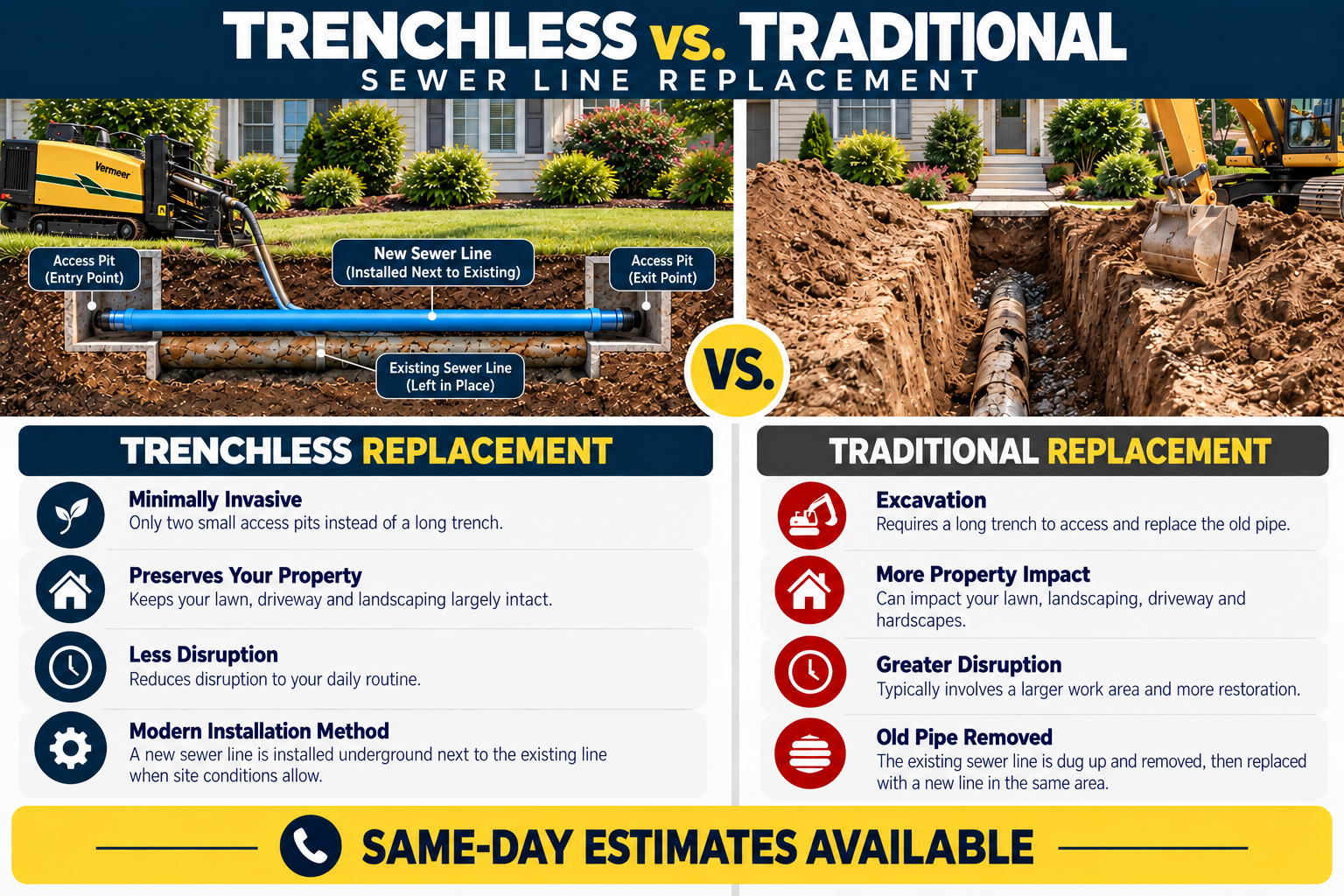
Traditional sewer repair exposes the pipe by digging down to it. Trenchless sewer work installs a new pipe alongside the existing one, reaching the area through small access points instead of opening the whole path. Both end with a working sewer line, but they differ in what gets disturbed, what each can fix, and which properties suit them.
Here is how the two compare, what to ask about, and what to expect. For the specific services, see sewer line repair, sewer line replacement, trenchless sewer line repair, and trenchless sewer line replacement.
How Traditional (Open-Trench) Sewer Work Goes
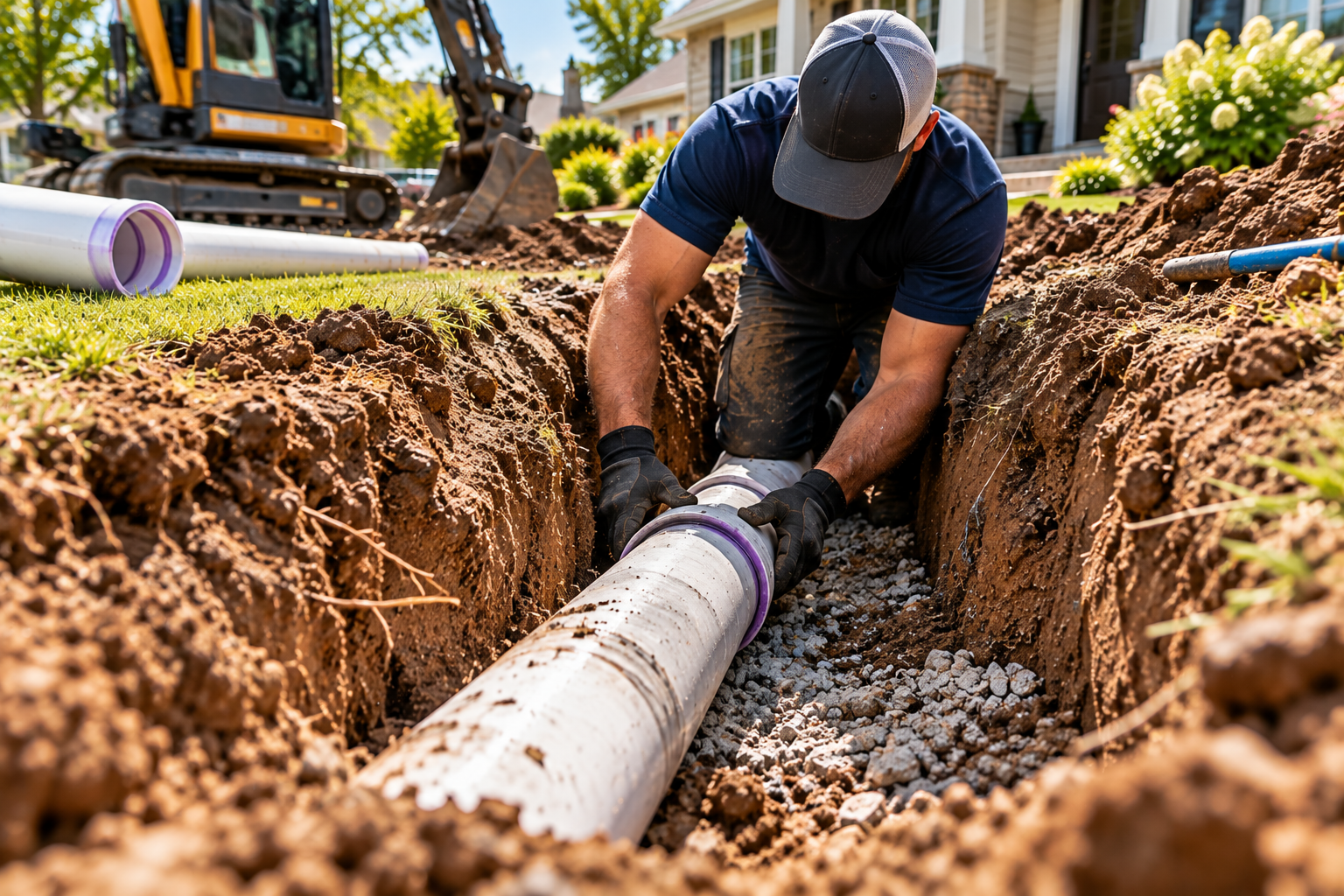
The ground above the pipe is excavated. For a repair, that is a pit over the damaged section. For a full replacement, it is a trench along the line's whole path. The old pipe is cut out or removed, new pipe is laid on a prepared bed at a continuous slope, and the work is tested, inspected, backfilled, and restored.
Its biggest advantage is control. Because the pipe is fully exposed, the installer can see what's underneath, correct a sag by resetting the grade, replace connections, and deal with whatever is found. Its biggest drawback is the disturbance: lawns, landscaping, driveways, and walkways along the path may need to be cut, moved, and restored.
How Trenchless Sewer Work Goes
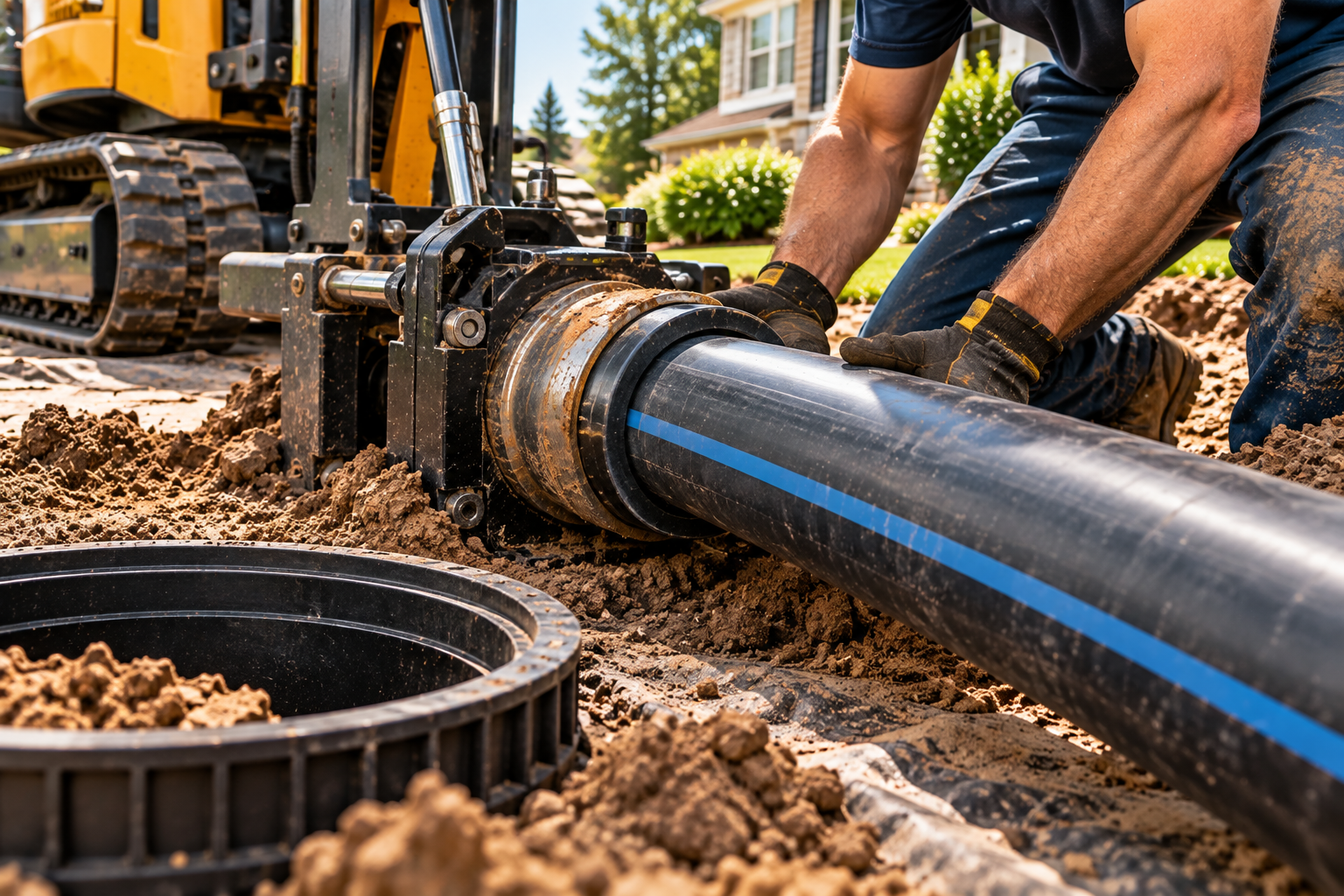
Trenchless installation puts a brand-new sewer line in alongside the existing one, using a minimally invasive method such as directional boring, and connects it into the sewer system. Digging is limited to small access points instead of the whole run, and those points are filled in and restored afterward.
Because digging is concentrated in a few spots, trenchless suits lines under driveways, patios, mature trees, or landscaping the homeowner wants to protect. Note that this means installing new pipe. It does not mean relining the old pipe, which is a different approach we don't offer.
Side by Side
Roughly speaking, the two trade off like this.
- Surface disturbance: trenchless is generally lower; traditional is higher along the full path
- Visibility: traditional exposes the whole line, so everything in the ground can be seen and dealt with
- Mature trees and hardscape above the line: often favors trenchless
- Tight spaces or crowded utilities beside the line: can favor traditional
- Cost: depends on the property; neither is always cheaper
What Can Rule Trenchless Out
Trenchless isn't a fit for every line. Limited room beside the existing line, other buried utilities crowding the same area, difficult ground, or very limited access for equipment can all push a property toward traditional work. We don't assume it in advance.
Some properties that look like a good fit still need excavation at the connection points. The only reliable answer comes from assessing the property on-site.
Cost Is Not Simply 'Trenchless Costs More'
Equipment, setup, and pit work have a cost, and so does restoring a long trench across lawn, landscaping, or hardscape. For some properties, avoiding that restoration offsets the trenchless costs, and for others it doesn't. That's why the honest answer is to compare both scopes for your line. For the factors that move the price, see the sewer repair and replacement cost guide.
Permits, 811, and Inspection Apply to Both
Either method involves digging, so buried utilities have to be located through Georgia 811 first. In the City of Marietta, plumbing work requires a permit, and the license holder performing the work applies for it. Properties in unincorporated Cobb County follow a different permit process. See Marietta water line permits for how jurisdiction works.
Which Should You Ask About?
If the line is damaged in one spot in an open area, a traditional sewer line repair may be the simplest answer. If the damage is more extensive, or something valuable sits on top of the line, ask whether it's a candidate for trenchless sewer line replacement. To decide between fixing and replacing in the first place, read repair vs. replacement.
 Tap to enlargeClick to enlarge
Related Underground Services
- Trenchless Sewer Line RepairFixing a damaged sewer line with a new pipe installed alongside it, with minimal digging.
- Trenchless Sewer Line ReplacementInstalling a new sewer line alongside the old one with minimal yard disruption.
- Sewer Line RepairTargeted repair of a cracked, offset, or root-damaged section of sewer line.
- Sewer Line ReplacementFull open-trench replacement when the sewer line is failing along its length.
- Directional BoringInstalling a new line under a driveway or hardscaping without tearing it up.





Related Underground Services
- Trenchless Sewer Line RepairFixing a damaged sewer line with a new pipe installed alongside it, with minimal digging.
- Trenchless Sewer Line ReplacementInstalling a new sewer line alongside the old one with minimal yard disruption.
- Sewer Line RepairTargeted repair of a cracked, offset, or root-damaged section of sewer line.
- Sewer Line ReplacementFull open-trench replacement when the sewer line is failing along its length.
- Directional BoringInstalling a new line under a driveway or hardscaping without tearing it up.
Helpful Resources
Learn more about underground water lines in Marietta and make informed decisions about your project.
- Sewer Line Repair vs. Replacement: How to DecideA factor-by-factor comparison to help weigh a targeted sewer repair against replacing the whole line.
- Sewer Line Repair and Replacement Costs: What Drives the PriceWhat changes the cost of a sewer repair or replacement, what an estimate should spell out, and how to compare quotes fairly.
- Trenchless vs. Open Trench Water Line ReplacementHow trenchless and open-trench water line replacement actually compare — landscaping impact, scope of excavation, and when each is the right fit.
- Signs of a Broken Sewer Line: What Marietta Homeowners Should Watch ForThe indoor, yard, and drain warning signs of a broken or collapsing sewer line, and how to tell them apart from an ordinary clog.
Trenchless vs. Traditional: FAQ
Common questions about choosing between trenchless and traditional sewer work.
Trenchless vs. Traditional: FAQ
Common questions about choosing between trenchless and traditional sewer work.
Is trenchless always better?
No. It usually disturbs less of the yard, but it can't be used on every property. Tight spaces, nearby utilities, and difficult ground can make traditional excavation the better choice.
Does trenchless mean relining my pipe?
No. Relining coats or inserts a liner inside the old pipe, and we don't offer it. We also don't do pipe bursting, which breaks up the old pipe in place. Trenchless here means installing a new pipe alongside the old one.
Is trenchless more expensive?
It depends on the property. Equipment and pit work have costs, but avoiding a long trench through lawn or hardscape can save restoration costs. Only an assessment can compare them for your line.
Is a traditional dig more reliable?
Traditional excavation gives full access to the pipe and the most control over slope and connections. Both methods produce a new working line when they fit the property.
Will either method damage my driveway?
Traditional work across a driveway generally requires cutting and replacing the section along the path. Trenchless can often avoid it, depending on depth and access.
How do I find out which my property qualifies for?
The line is assessed on-site, along with what's around it. That determines whether trenchless is workable or whether excavation is the better option.
Not Sure Which Method Fits?
Reach out and we'll help you work out whether your sewer line is a trenchless candidate, with no obligation to move forward.
Not Sure Which Method Fits?
Reach out and we'll help you work out whether your sewer line is a trenchless candidate, with no obligation to move forward.
Call (770) 676-1685