

Signs of an Underground Water Line Leak
A room-by-room and yard checklist for recognizing an underground water line leak before it becomes a bigger repair.
Why It Helps to Check More Than One Sign
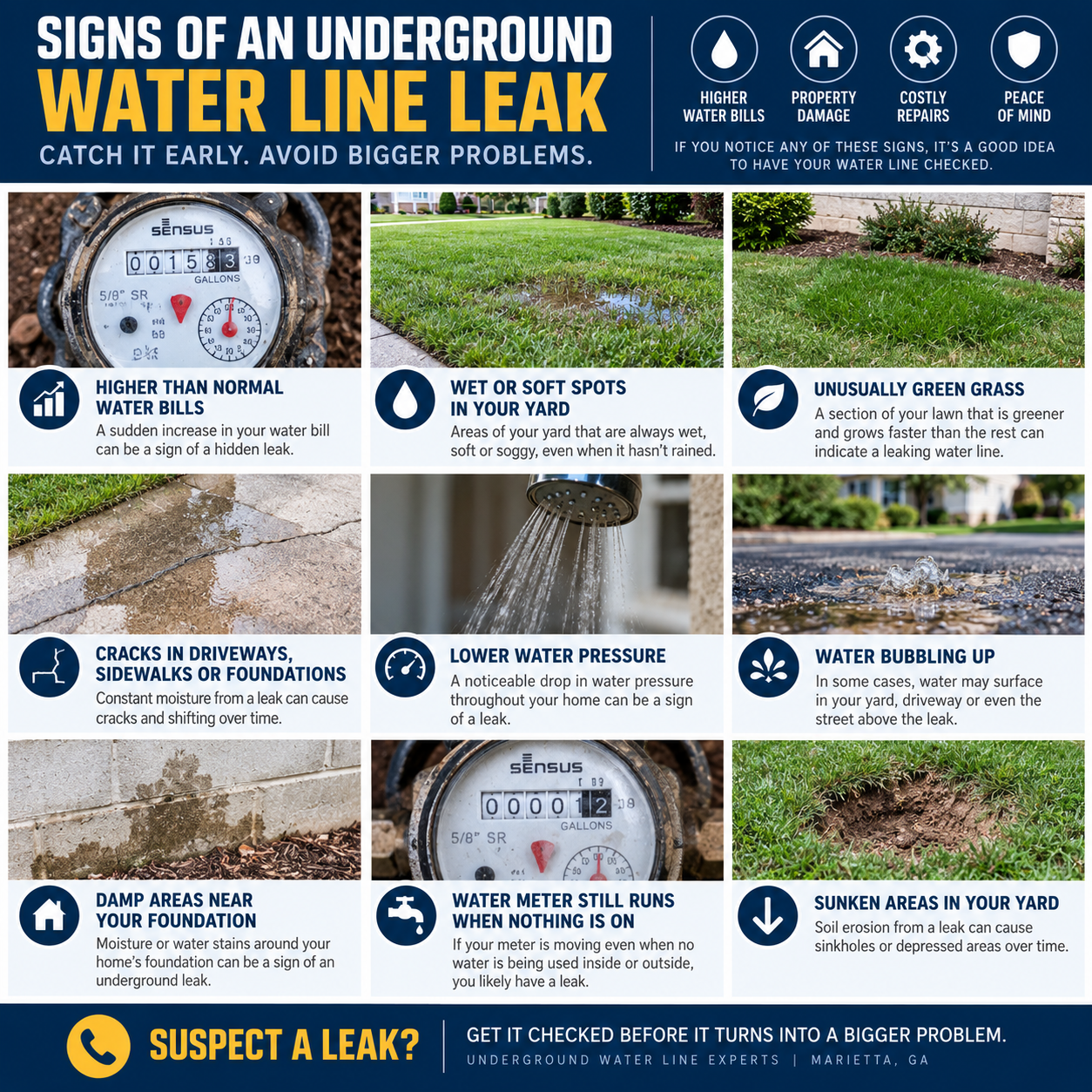
An underground water line leak doesn't always announce itself the same way twice. Some leaks show up first as a wet patch in the yard; others stay hidden underground for weeks and only become obvious through a rising water bill or a drop in pressure. Because the line runs from the meter to the house, and that section is the property owner's responsibility to maintain, it helps to know what to look for in each of the places a leak tends to reveal itself.
The sections below are organized by where you'd actually notice something: the yard, your water bill, your water pressure, your meter, and what you might hear.
In the Yard
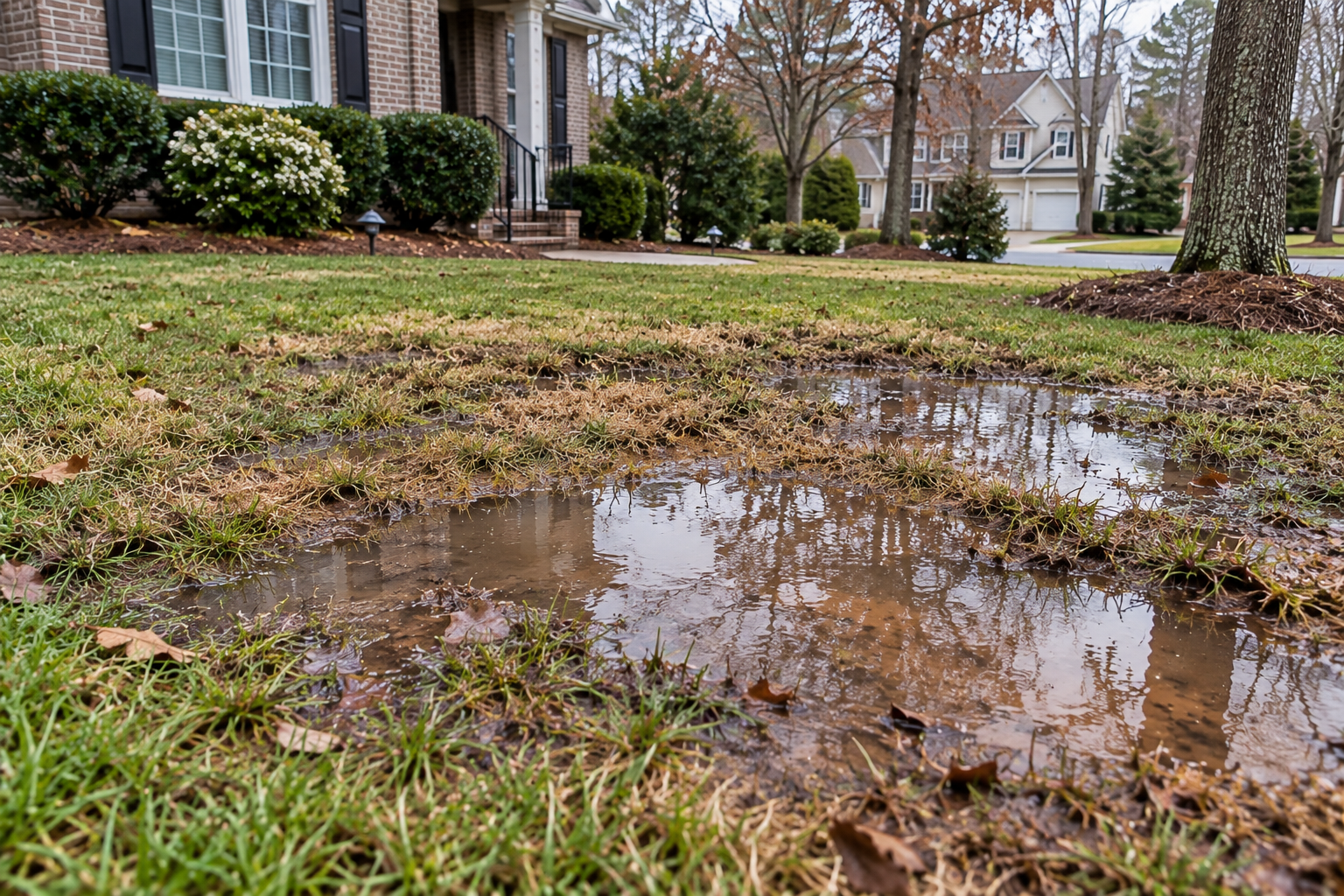
A yard-based leak sign is often the most visible, but it isn't always dramatic. Watch for a wet, soggy, or unusually green patch that doesn't line up with recent rain or your sprinkler schedule; a soft or sunken spot near the foundation, walkway, or driveway edge; or pooling and bubbling water at the surface on otherwise dry days.
For a closer look at how to distinguish a genuine water-line leak from drainage, irrigation runoff, or normal rain, see water leaking in the yard.
- A wet, soggy, or unusually green patch of grass
- A soft or sunken spot near the foundation or driveway
- Pooling or bubbling water on otherwise dry days
Your Water Bill
A water bill that climbs without an explanation — no new houseguests, no filled pool, no obvious change in habits — is one of the more reliable signs of an underground leak, because it reflects water leaving the system continuously, day and night. The most useful comparison isn't last month's bill; it's the same billing period from a year earlier, which controls for seasonal watering habits.
Water Pressure Throughout the House
A leak on the underground line reduces the pressure available to the whole house, not just one fixture. If pressure is weak at a single faucet, the more likely cause is something local, such as a clogged aerator or a partially closed valve. If pressure is noticeably down at every tap at roughly the same time, an underground leak upstream of the whole system becomes a more likely explanation.
The Water Meter
Your water meter measures all water passing through it, whether it's going to a running faucet or draining silently into the ground. With every fixture off, the meter's dial or digital indicator should stop moving. If it keeps registering flow, water is going somewhere on your side of the meter. See how to check your water meter for a leak for the full step-by-step test.
The Sound of Running Water
Some underground leaks, particularly larger ones under pressure, produce an audible sound near the meter box, foundation, or crawlspace — unmistakable once it appears, though it doesn't happen with every leak.
Related Underground Services
- Underground Water Line RepairSymptoms, diagnosis, and repair options for a failing underground water line.
- Underground Leak DetectionMeter testing, acoustic equipment, and line locating before any digging starts.
- Broken Underground Pipe RepairWhat to do first for a visibly surfacing break or sudden pressure loss.
Related Underground Services
- Underground Water Line RepairSymptoms, diagnosis, and repair options for a failing underground water line.
- Underground Leak DetectionMeter testing, acoustic equipment, and line locating before any digging starts.
- Broken Underground Pipe RepairWhat to do first for a visibly surfacing break or sudden pressure loss.
Helpful Resources
Learn more about underground water lines in Marietta and make informed decisions about your project.
- Water Leaking in the Yard: Is It Your Water Line?How to tell a genuine underground water-line leak apart from drainage, irrigation, or rain runoff — and what to do once you're fairly sure.
- How to Check Your Water Meter for a LeakA step-by-step meter test to confirm a leak, and how to narrow down whether it's inside the house or in the underground line.
- Repair vs. Replace: How to Decide on Your Main Water LineA factor-by-factor comparison to help weigh a targeted spot repair against full water line replacement.
Signs of a Leak: FAQ
Common questions about recognizing an underground water line leak.
Signs of a Leak: FAQ
Common questions about recognizing an underground water line leak.
Can an underground water line leak without any visible sign in the yard?
Yes. A leak on a deep or well-drained section of line can show up first as a bill increase, a pressure drop, or a moving meter, with no visible wet spot for a while. That's why it helps to check more than one category rather than relying on yard appearance alone.
How fast does a water bill usually rise from an underground leak?
It depends on the size of the leak and how long it's been running. Comparing usage to the same month a year earlier is a more reliable signal than comparing to last month.
Is low water pressure always a sign of an underground leak?
No — low pressure has other common causes, including a partially closed shutoff valve, municipal supply issues, or a clogged aerator. What points more specifically to an underground leak is low pressure at every fixture at the same time.
Do all underground leaks eventually cause a sinkhole or sunken area?
No. A sunken or soft spot usually only develops after a leak has been running long enough to erode soil beneath the surface. Many leaks are caught through the bill, pressure, or meter test well before reaching that stage.
What should I do if I notice more than one sign at the same time?
Two or more signs together — like a green patch in the yard plus a rising bill, or a moving meter plus reduced pressure — are a strong reason to move forward with underground leak detection before any digging starts.
Does an underground water line leak always require excavation to fix?
Not always. Once a leak is confirmed and located, a targeted spot repair or a trenchless method can often address it without a full open-trench excavation, depending on the line's condition and path.
Seeing Signs of a Leak?
Reach out and we'll help you understand what's likely going on — no obligation to move forward.
Seeing Signs of a Leak?
Reach out and we'll help you understand what's likely going on — no obligation to move forward.
Call (770) 676-1685