

Water Leaking in the Yard: Is It Your Water Line?
How to tell a genuine underground water-line leak apart from drainage, irrigation, or rain runoff — and what to do once you're fairly sure.
The Yard Is Often the First Place a Leak Shows Up
Because the underground water line runs beneath your property between the meter and the house, a leak on that line often surfaces first as a change in the yard above it, before it shows up on a bill or in water pressure. But a wet or soggy patch of lawn has several possible causes, and not all of them mean you have a water-line leak.
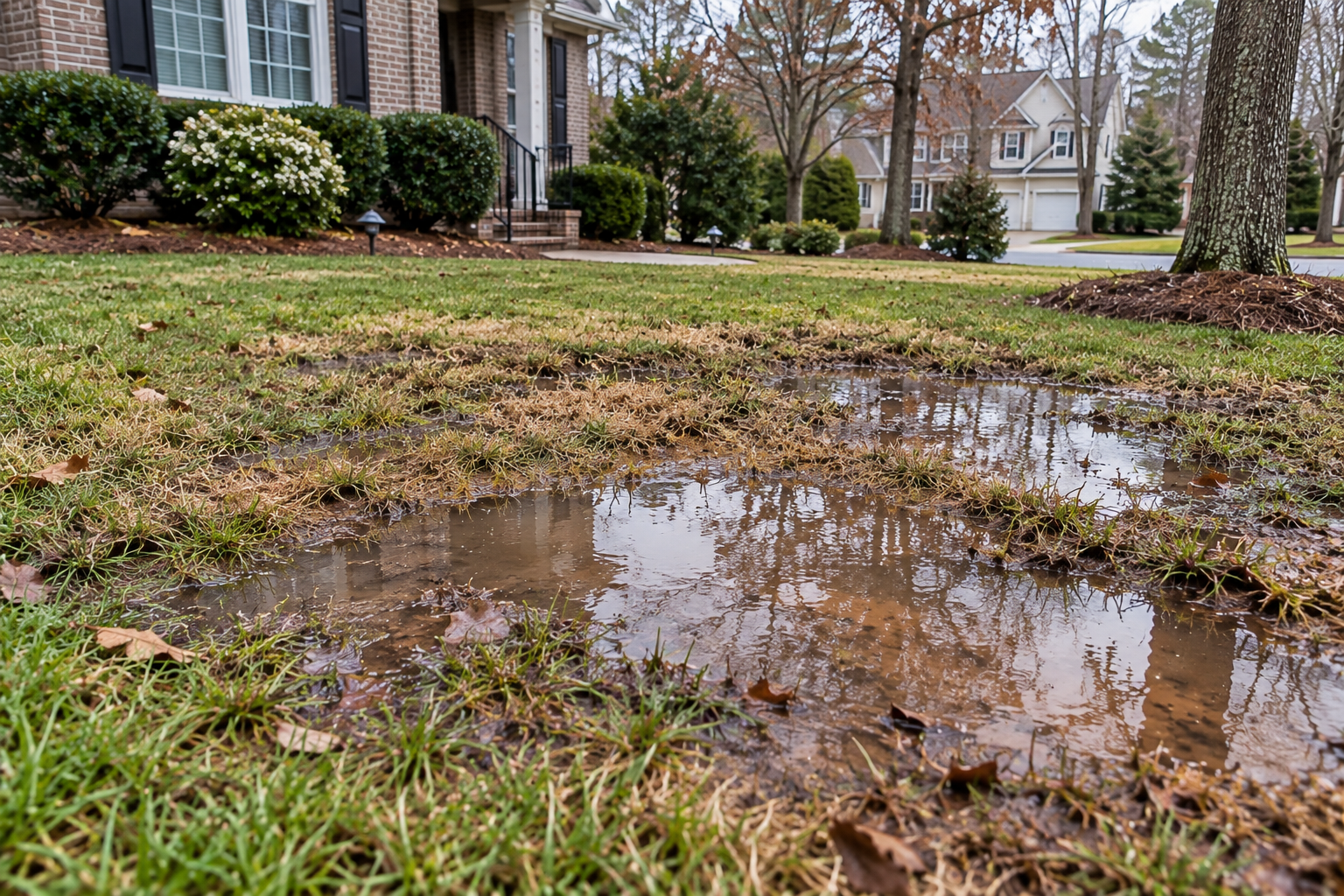
What a Genuine Water-Line Leak Tends to Look Like
A handful of characteristics, especially in combination, point more specifically toward an underground water-line leak rather than a drainage or watering issue.
- It stays wet on a consistent basis, regardless of the weather
- The grass over it is unusually green and lush compared with the rest of the lawn
- It can feel warm or stay soft in cold weather while the ground around it is frosted
- Bubbling or standing pooled water on dry days with no recent rain
What Points Toward Drainage, Irrigation, or Rain Instead
Before assuming a water-line leak, rule out the more common, cheaper-to-fix explanations first: poor grading or drainage that tracks closely with rain events, a stuck sprinkler head or cracked irrigation zone line, or a downspout discharge point that repeatedly saturates one area after storms.
If the wet spot doesn't clearly match your sprinkler layout or a drainage path, and it isn't tracking with rainfall, the next useful step is checking your water meter — see how to check your water meter for a leak for the exact process. Also check whether other signs are present at the same time, too: a rising water bill, or lower pressure throughout the house. Our broader signs of an underground water line leak guide covers the full set of indicators.
How to Narrow It Down
- Turn off all water inside and outside your home
- Locate your water meter (usually near the street)
- Check if the meter is still moving
- If it's moving, you likely have a leak
- Consider a professional leak detection service to confirm the exact location
What to Do Next If It Looks Like a Leak
If the yard pattern and a moving meter both point the same direction, the next step is confirming the leak's location before any digging happens. See underground leak detection for how that's typically done. From there, underground water line repair covers what repair looks like once the leak is confirmed and located.
Helpful Resources
Learn more about underground water lines in Marietta and make informed decisions about your project.
- Signs of an Underground Water Line LeakA room-by-room and yard checklist for recognizing an underground water line leak before it becomes a bigger repair.
- How to Check Your Water Meter for a LeakA step-by-step meter test to confirm a leak, and how to narrow down whether it's inside the house or in the underground line.
- Repair vs. Replace: How to Decide on Your Main Water LineA factor-by-factor comparison to help weigh a targeted spot repair against full water line replacement.
Water in the Yard: FAQ
Common questions about telling a water-line leak apart from drainage or irrigation.
Water in the Yard: FAQ
Common questions about telling a water-line leak apart from drainage or irrigation.
Could a wet spot in my yard just be poor drainage?
Yes — that's one of the most common alternate explanations. Poor drainage tends to track closely with rainfall: the area gets wet during or shortly after rain and dries out over the following days. A water-line leak, by contrast, tends to stay wet on a consistent basis regardless of whether it's rained recently.
Why would a leak make the grass greener instead of killing it?
A slow, steady leak is essentially free, constant irrigation for whatever's growing above it, so grass and weeds over the line often respond by growing faster and greener than the surrounding lawn.
Is a warm patch in the yard during cold weather always a leak?
Not always, but it's a notable sign worth checking further. Water traveling underground to your home is typically warmer than frozen ground in winter, so a patch that stays soft or warm while everything around it is frosted is a pattern that lines up with a leak.
What should I do if I'm still not sure it's a leak?
Check your water meter with every fixture in the house off — a meter that keeps moving is a strong independent confirmation that water is escaping somewhere on your side of the system.
Will fixing a water line leak in my yard require digging up the whole lawn?
Not necessarily. Once the leak is located, a targeted spot repair or a trenchless method can often address it with far less disruption than a full open-trench excavation, depending on the line's condition.
How urgent is a water leak in the yard?
It depends on the signs. A slow, gradual wet spot is worth scheduling soon but usually isn't an emergency. Water actively surfacing or pooling with a sudden pressure drop is more urgent — see broken underground pipe repair for what to do first.
Not Sure What's Causing the Wet Spot?
Reach out and we'll help you figure out whether it's your water line — no obligation to move forward.
Not Sure What's Causing the Wet Spot?
Reach out and we'll help you figure out whether it's your water line — no obligation to move forward.
Call (770) 676-1685