

Underground Leak Detection in Marietta, GA
Before anyone digs, the question is where the leak actually is. Here's a closer look at how underground leak detection works — the methods, what each one can tell you, and how they fit together.
Why Diagnosis Comes Before Digging
An underground leak isn't always directly beneath the spot where water surfaces. Water pressure and soil conditions can carry it along the pipe or through the ground before it becomes visible, which is why leak detection focuses on narrowing down the actual location using a combination of methods before any excavation begins.
For the broader repair process this diagnosis feeds into, see underground water line repair.
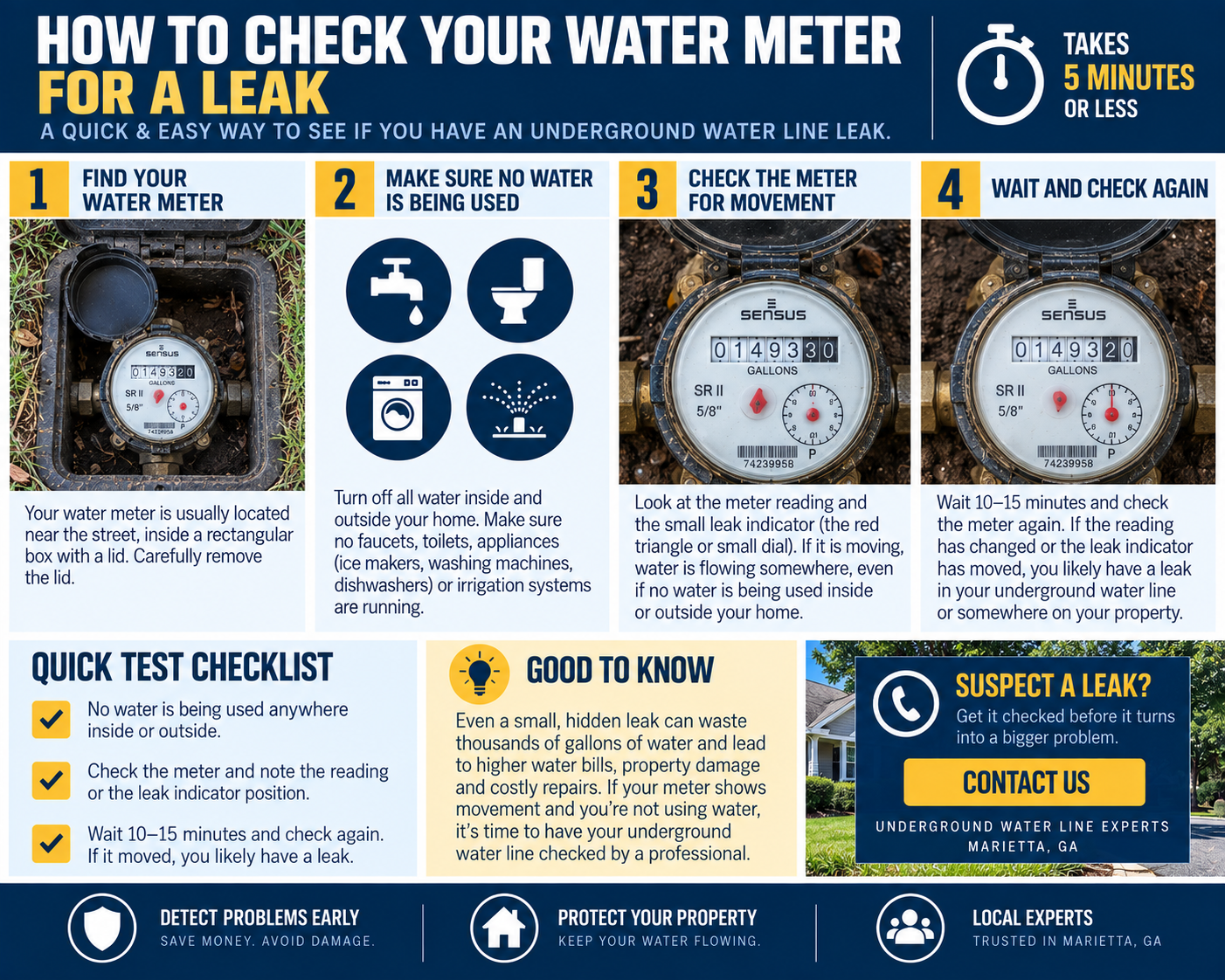
Water Meter Testing
With every fixture off, the meter should show no movement. If it keeps registering flow, water is escaping somewhere on your side of the meter.
Acoustic Leak Detection
Specialized equipment can detect the sound of water escaping a pressurized line through the ground or exposed pipe.
Line Locating
The existing line's path is physically located and marked before any digging, both to focus the search and to avoid other buried utilities.
Visual Site Inspection
A trained look at the yard, meter box, and foundation area for unusually green grass, soft soil, pooling, or a sunken section of ground.
Multi-Method Diagnosis
A typical sequence starts with a meter test, moves to visual inspection, uses line locating, and applies acoustic equipment to narrow the leak down.
Emergency Leak Assessment
When signs point to an emergency — active surfacing water or a sudden pressure loss — the priority shifts to limiting damage first.
What Affects the Detection Cost
Leak detection pricing isn't one-size-fits-all, but a few factors consistently drive how much diagnostic work a given property needs.
- How Many Methods Are Required
- Property Size & Line Length
- Access
- How Clear the Signs Are
Underground Specialists
Focused specifically on water-service-line repair, replacement, and trenchless work.
Clear Next Steps
We help you understand your options before any work starts.
No-Pressure Contact
Reach out by phone, text, or form — there's no obligation to move forward.
Trenchless Options
Minimal-disruption methods available when a property qualifies.
Related Underground Services
- Underground Water Line RepairSymptoms, diagnosis, and repair options for a failing underground water line.
- Main Water Line RepairSpot repair on the main service line when whole-house pressure or supply drops.
- Trenchless Water Line ReplacementReplacing a line through small access points instead of a full open trench.
- Broken Underground Pipe RepairWhat to do first for a visibly surfacing break or sudden pressure loss.
Helpful Resources
Learn more about underground water lines in Marietta and make informed decisions about your project.
- How to Check Your Water Meter for a LeakA step-by-step meter test to confirm a leak, and how to narrow down whether it's inside the house or in the underground line.
- Signs of an Underground Water Line LeakA room-by-room and yard checklist for recognizing an underground water line leak before it becomes a bigger repair.
- Water Leaking in the Yard: Is It Your Water Line?How to tell a genuine underground water-line leak apart from drainage, irrigation, or rain runoff — and what to do once you're fairly sure.
- Marietta Water Line Permits: What's RequiredWhen a permit is required for water-line work in Marietta, who applies for it, and how to check whether City of Marietta or Cobb County rules apply.
- Repair vs. Replace: How to Decide on Your Main Water LineA factor-by-factor comparison to help weigh a targeted spot repair against full water line replacement.
- Trenchless vs. Open Trench Water Line ReplacementHow trenchless and open-trench water line replacement actually compare — landscaping impact, scope of excavation, and when each is the right fit.
- Who's Responsible for the Water Line From Meter to House?The public main vs. the property owner's line — and why your Marietta address doesn't always tell you which authority applies.
Underground Leak Detection FAQ
Common questions about how underground leaks get located in Marietta.
Not Sure Where the Leak Is?
Reach out and we'll help figure out the right diagnostic approach for your property — no obligation to move forward.
Why Diagnosis Comes Before Digging
An underground leak isn't always directly beneath the spot where water surfaces. Water pressure and soil conditions can carry it along the pipe or through the ground before it becomes visible, which is why leak detection focuses on narrowing down the actual location using a combination of methods before any excavation begins.
For the broader repair process this diagnosis feeds into, see underground water line repair.
Water Meter Testing
With every fixture off, the meter should show no movement. If it keeps registering flow, water is escaping somewhere on your side of the meter.
Acoustic Leak Detection
Specialized equipment can detect the sound of water escaping a pressurized line through the ground or exposed pipe.
Line Locating
The existing line's path is physically located and marked before any digging, both to focus the search and to avoid other buried utilities.
Visual Site Inspection
A trained look at the yard, meter box, and foundation area for unusually green grass, soft soil, pooling, or a sunken section of ground.
Multi-Method Diagnosis
A typical sequence starts with a meter test, moves to visual inspection, uses line locating, and applies acoustic equipment to narrow the leak down.
Emergency Leak Assessment
When signs point to an emergency — active surfacing water or a sudden pressure loss — the priority shifts to limiting damage first.
What Affects the Detection Cost
Leak detection pricing isn't one-size-fits-all, but a few factors consistently drive how much diagnostic work a given property needs.
- How Many Methods Are Required
- Property Size & Line Length
- Access
- How Clear the Signs Are
Underground Specialists
Focused specifically on water-service-line repair, replacement, and trenchless work.
Clear Next Steps
We help you understand your options before any work starts.
No-Pressure Contact
Reach out by phone, text, or form — there's no obligation to move forward.
Trenchless Options
Minimal-disruption methods available when a property qualifies.
Related Underground Services
- Underground Water Line RepairSymptoms, diagnosis, and repair options for a failing underground water line.
- Main Water Line RepairSpot repair on the main service line when whole-house pressure or supply drops.
- Trenchless Water Line ReplacementReplacing a line through small access points instead of a full open trench.
- Broken Underground Pipe RepairWhat to do first for a visibly surfacing break or sudden pressure loss.
Helpful Resources
Learn more about underground water lines in Marietta and make informed decisions about your project.
- How to Check Your Water Meter for a LeakA step-by-step meter test to confirm a leak, and how to narrow down whether it's inside the house or in the underground line.
- Signs of an Underground Water Line LeakA room-by-room and yard checklist for recognizing an underground water line leak before it becomes a bigger repair.
- Water Leaking in the Yard: Is It Your Water Line?How to tell a genuine underground water-line leak apart from drainage, irrigation, or rain runoff — and what to do once you're fairly sure.
- Marietta Water Line Permits: What's RequiredWhen a permit is required for water-line work in Marietta, who applies for it, and how to check whether City of Marietta or Cobb County rules apply.
- Repair vs. Replace: How to Decide on Your Main Water LineA factor-by-factor comparison to help weigh a targeted spot repair against full water line replacement.
- Trenchless vs. Open Trench Water Line ReplacementHow trenchless and open-trench water line replacement actually compare — landscaping impact, scope of excavation, and when each is the right fit.
- Who's Responsible for the Water Line From Meter to House?The public main vs. the property owner's line — and why your Marietta address doesn't always tell you which authority applies.
Underground Leak Detection FAQ
Common questions about how underground leaks get located in Marietta.
Do I need leak detection if I can already see a wet spot in my yard?
Often yes. A visible wet spot tells you a leak exists somewhere nearby, but the actual break isn't always directly under it — water can travel along the pipe or through soil before surfacing. Detection narrows down the specific point before anyone digs.
How accurate is acoustic leak detection?
It's a well-established method for narrowing down a leak's location, but it works best combined with line locating and site inspection rather than on its own. Soil type, pipe depth, and pipe material can all affect how well sound travels.
Can leak detection be done without shutting off my water?
A meter test specifically requires shutting off every fixture and appliance temporarily to get an accurate reading, but that's typically brief. Other methods like acoustic listening and visual inspection don't require the water to stay off.
What happens after the leak is located?
Once the general area is narrowed down, the next step is usually a targeted excavation or, in some cases, a trenchless approach.
How long does leak detection usually take?
It depends on how many methods are needed and how cooperative the signs are. A site visit is the only way to estimate timing for a specific property.
Will I need to dig up my whole yard just to find the leak?
No. Detection is specifically meant to avoid that — meter testing, acoustic equipment, and line locating narrow the search down to a small, specific area before any digging happens.
Not Sure Where the Leak Is?
Reach out and we'll help figure out the right diagnostic approach for your property — no obligation to move forward.
Call (770) 676-1685